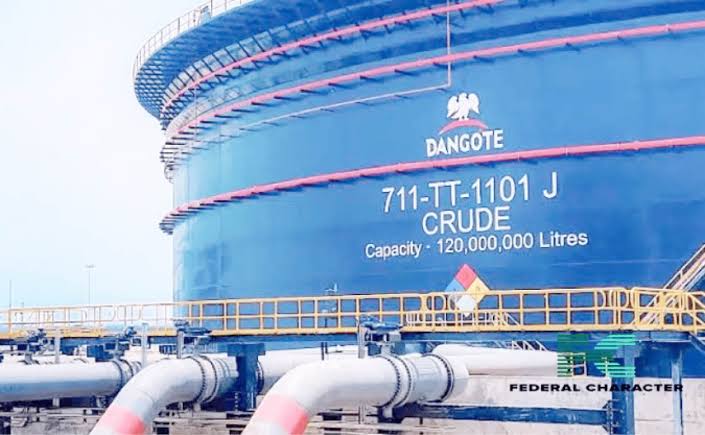
Nigeria’s largest refinery, the Dangote Petroleum Refinery, is facing a major crude oil supply shortage, raising concerns over its ability to maintain optimal production levels.
The refinery reportedly requires 13 crude cargoes monthly to operate at full capacity but is currently receiving only five cargoes, representing a 62 per cent shortfall. Industry analysts warn that the supply gap could affect refining output and efforts to sustain stable fuel prices.
According to the African Energy Council (AEC), the refinery is operating at about one-third of its crude oil requirements despite Nigeria’s status as a major crude producer. The group argued that the challenge stems from structural issues within the supply chain rather than a lack of available crude.
The AEC also highlighted concerns over the dual role of the Nigerian National Petroleum Company (NNPC) as both a crude supplier and a market competitor, describing it as a conflict of interest that continues to test the effectiveness of the Petroleum Industry Act (PIA).
Data from the Nigerian Midstream and Downstream Petroleum Regulatory Authority (NMDPRA) showed that crude deliveries to local refineries fell from an average of 612,000 barrels per day in April to 578,000 barrels per day in May, a decline of 5.6 per cent.
The supply challenge comes amid an ongoing court case filed by Dangote Refinery against the Federal Government, NMDPRA and other parties over the issuance of fuel import licences. The refinery argues that imports should only be allowed when local production is insufficient, while regulators and marketers maintain that imports remain necessary to ensure adequate fuel supply nationwide.
The dispute intensified after NMDPRA approved the importation of 720,000 metric tonnes of petrol by six marketing companies, despite the regulator’s claim that Dangote Refinery currently supplies more than 90 per cent of Nigeria’s daily petrol consumption.
Dangote officials have previously accused international oil companies of making local crude purchases difficult through high premiums, forcing the refinery to import crude from overseas. The company has called for stronger regulatory support, arguing that improved access to local crude would boost production, create jobs and strengthen Nigeria’s energy security.