The Federal Government spent N30.64tn on additional expenses between June 2023 and December 2025 following the removal of petrol subsidy and foreign exchange reforms, while the measures generated N15.8tn in additional resources for the Federation.
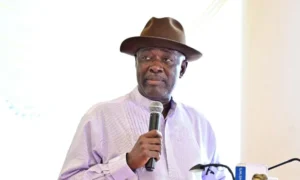
Finance Minister and Coordinating Minister of the Economy, Taiwo Oyedele, disclosed this on Wednesday during the presentation of the Federal Government’s Nigeria Reform Scorecard.
Oyedele said the N15.8tn was not kept in a separate account as “subsidy savings.” Instead, the benefits of the reforms were reflected in higher naira revenues accruing to the Federation as a result of changes in the exchange rate and increased revenue collections.
Of the N15.8tn, the Federal Government received N5.4tn, representing 34 per cent. States received N6.5tn, while local governments received N3.9tn through the Federation Account allocation system.
The Federal Government also recorded N3.1tn in additional independent revenue, mainly from higher remittances by government-owned entities, while N11.9tn was raised through additional borrowing.
This brought the government’s total incremental resources to N20.4tn, leaving a gap of about N10.2tn when compared with its N30.64tn additional expenditure.
The government said the balance was funded from its existing revenue base.
A significant portion of the additional spending went into wages, debt servicing and infrastructure.
The government spent N9.39tn on wage adjustments, including the new national minimum wage, wage awards and allowances for public servants.
Another N9.37tn was used for additional external debt servicing, largely due to the depreciation of the naira, while N6.47tn went into strategic infrastructure projects.
Other expenditures included N3.14tn in additional electricity subsidy costs, N1.24tn in higher domestic debt servicing, N423.8bn in social welfare transfers and N419.1bn for various government interventions.
The government also spent N201.26bn to meet the higher naira cost of foreign obligations.
Oyedele explained that the foreign exchange reforms also contributed to the additional resources by ending what he described as an implicit exchange-rate subsidy that created opportunities for rent-seeking.
He said the reforms had helped create fiscal space, but acknowledged that they came with significant costs for Nigerians, including higher prices, increased living expenses and pressure on businesses.
The disclosure provides the government’s latest detailed explanation of how resources generated after the removal of petrol subsidy were distributed and spent.
President Bola Tinubu removed the petrol subsidy in May 2023, promising that resources previously used to support the scheme would be redirected towards infrastructure, social programmes and other areas that would benefit Nigerians.
However, the policy triggered sharp increases in petrol prices, transportation costs and the general cost of living, leading to persistent calls for the government to account for the savings.
The government said the new scorecard was intended to provide transparency on both the benefits and costs of the reforms.
Information and National Orientation Minister, Mohammed Idris, said Nigerians had the right to know how the resources freed by the reforms were being used.
Budget and Economic Planning Minister, Abubakar Atiku Bagudu, also defended the reforms, saying the administration inherited an economy with limited fiscal capacity and had to take difficult decisions to address revenue shortfalls and create room for investment.
The Federal Government maintained that the reforms, despite their immediate impact on households and businesses, were necessary to improve the country’s fiscal position and prevent a deeper economic crisis.