An energy expert, Dan Kunle, has called on President Bola Tinubu’s administration to stop committing additional public funds to the rehabilitation of Nigeria’s long-inactive government-owned refineries until the government determines whether further investment is economically justified.
Kunle made the recommendation in an open letter to the President, following Tinubu’s recent assurance that the Port Harcourt, Warri and Kaduna refineries would resume operations.
The President had told the leadership of the Nigeria Union of Petroleum and Natural Gas Workers at the Presidential Villa in Abuja that his administration was undertaking a major restructuring of the facilities to restore their profitability and ensure they provide value to Nigerians.
Kunle, however, argued that the government should first conduct a detailed review of previous rehabilitation programmes, including the amount spent and the reasons the facilities have repeatedly failed to operate sustainably.
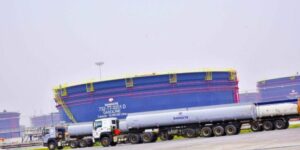
The four refinery units in question have a combined installed capacity of about 445,000 barrels per day. They comprise the 65,000 barrels-per-day old Port Harcourt refinery, the 150,000 bpd new Port Harcourt refinery, the 125,000 bpd Warri refinery and the 110,000 bpd Kaduna refinery.
Despite several rehabilitation efforts, the facilities have remained largely inactive for years, with substantial public funds committed to their restoration.
Kunle noted that the Federal Executive Council approved $1.5bn for the rehabilitation of the Port Harcourt refinery in 2021, while a further $1.484bn was approved for the Warri and Kaduna facilities.
He said the nearly $3bn approved in 2021 represented only part of the funds committed to the refineries over several years.
According to him, records cited by the House of Representatives and information attributed to the Nigerian National Petroleum Company Limited indicated that the three refinery companies accumulated about N4.8tn in operating and running costs between 2010 and 2020, alongside losses estimated at N366.5bn.
He added that about N42.65bn was reportedly spent on rehabilitation projects between 2013 and 2019, while a separate legislative motion in 2023 put cumulative allocations for refinery renovation since 2010 at N11.35tn.
Kunle cautioned that the figures should be independently verified before being regarded as audited expenditure, calling for a forensic examination of the funds committed to the facilities.
He also referred to NNPC’s 2024 annual report, which indicated that Project Yield, a seven-year financing arrangement for the Port Harcourt rehabilitation project, had drawn approximately N1.4tn by the end of 2024.
The expert said the refinery challenge was no longer simply a question of repairing old equipment but one involving the wider economic cost of continuing to invest in assets whose viability remained uncertain.
He also questioned the commitment of Chinese partners involved in the projects, asking whether their interest was primarily to restore the refineries or to secure access to the sites for other private ventures.
Beyond the refinery plants themselves, Kunle highlighted persistent problems with crude supply and petroleum product evacuation infrastructure. He pointed to damaged and vulnerable pipelines, depots and terminals as major obstacles to sustainable refinery operations.
He said billions had also been spent over the years on pipeline repairs, security and maintenance, further increasing the cost of keeping the refinery system operational.
Kunle therefore described the problem as a broader infrastructure failure rather than one limited to three idle refineries.
He recommended that the Federal Government consider transferring the facilities to the Bureau of Public Enterprises for possible private-sector management, while conducting a comprehensive assessment of their commercial prospects.
The expert also cited other government-owned projects, including Ajaokuta Steel Company, NIOMCO-Itakpe, ALSCON, NIPP power plants and the Mambilla hydropower project, as examples of national assets that have absorbed substantial public resources without achieving their intended economic impact.
He urged the government to determine which assets should be rehabilitated, concessioned, sold, repurposed or replaced, rather than continuing to fund projects simply because large sums have already been spent on them.
Meanwhile, petroleum marketers have expressed support for Tinubu’s plan to revive the government-owned refineries.
The National Vice-President of the Independent Petroleum Marketers Association of Nigeria, Hammed Fashola, said the current strategy differs from previous attempts and expressed confidence that the facilities could eventually return to operation.
The National President of the Petroleum Products Retail Outlets Owners Association of Nigeria, Billy Gillis-Harry, also supported the revival programme, arguing that Nigeria needs several sources of refined petroleum products rather than relying heavily on a single major refinery.
Both marketers rejected former President Olusegun Obasanjo’s earlier view that the government-owned refineries could not be successfully restored.