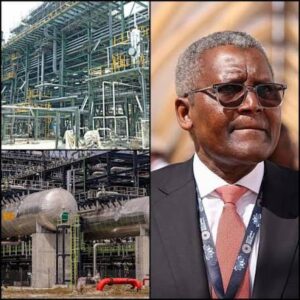
Nigeria will need to maintain steady crude production, protect oil infrastructure and improve security in the Niger Delta to sustain the N12.91 trillion it earned from crude oil exports in the second quarter of 2026, industry experts have said.
The latest foreign trade report by the National Bureau of Statistics (NBS) showed that crude oil remained Nigeria’s leading export commodity in Q2, accounting for 47.79 per cent of total exports.
Nigeria’s total merchandise trade rose to N41.44 trillion during the quarter, compared with N39.24 trillion recorded in the corresponding period of 2025. Exports accounted for N27.02 trillion, while imports stood at N14.42 trillion.
The value of exports increased by 18.77 per cent year-on-year and 27.64 per cent compared with the first quarter of 2026, with crude oil making the largest contribution.
The strong performance came as international oil prices climbed, with Brent crude trading at about $98 per barrel amid heightened geopolitical tensions involving the United States and Iran.
Experts said the price increase could provide Nigeria with stronger foreign exchange inflows, higher government revenue and an improved external balance, particularly because the current price is well above the country’s 2026 budget benchmark of $64.85 per barrel.
However, they warned that Nigeria would only fully benefit from the price rally if it can maintain production and prevent crude losses caused by oil theft, pipeline vandalism and insecurity.
The Chief Executive Officer of the Centre for the Promotion of Private Enterprise, Dr Muda Yusuf, said higher oil prices could improve Nigeria’s current account position and increase foreign exchange liquidity.
He added that stronger oil earnings could ease pressure on the naira and boost investor confidence.
Analysts have consequently called for greater attention to the protection of pipelines and other critical petroleum infrastructure across the Niger Delta.
Nse Victor Udoh, an industry analyst, said pipeline surveillance should be considered a key part of Nigeria’s energy security efforts.
He explained that disruptions to crude transportation can affect the entire petroleum value chain, from production and exports to refinery operations and government revenue.
Udoh also noted that reliable crude flows give producers, refineries and government agencies greater certainty when planning operations, budgets and long-term investments.
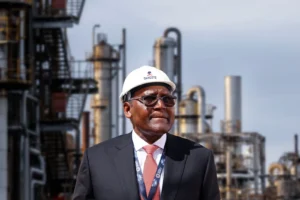
Security operations in the Niger Delta have increasingly involved government agencies and private contractors. Tantita Security Services Nigeria Limited has continued surveillance activities aimed at protecting pipelines and other oil assets in the region.
The company has also moved to expand its surveillance capabilities through technology. It recently contracted United States-based Textron Systems to supply three Aerosonde Mk. 4.7 vertical take-off and landing unmanned aircraft systems.
The aircraft are expected to provide additional aerial monitoring of oil and gas infrastructure and help improve the detection of threats across difficult-to-access areas.
Experts believe the combination of stronger surveillance, improved intelligence gathering and cooperation with oil-producing communities could help reduce crude losses and support higher production.
Oil and gas policy expert Charles Uzoma Ozoemena also advocated stronger intelligence networks and greater involvement of local communities in protecting petroleum facilities.
He said residents should be encouraged to provide timely information to security agencies, arguing that early intelligence could help authorities prevent attacks and other disruptions rather than responding after they occur.
Despite the strong Q2 performance, analysts cautioned that Nigeria should not regard the N12.91 trillion earnings as a guaranteed trend.
They said sustaining the revenue will depend on crude production levels, global oil prices, the security situation in producing communities, pipeline integrity and continued investment in upstream operations.
With oil prices currently above the budget benchmark, experts said Nigeria has an opportunity to maximise its crude earnings. But turning that opportunity into sustained revenue will require the country to keep its oil infrastructure secure and ensure that crude reaches export terminals without major disruptions.