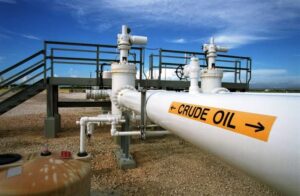
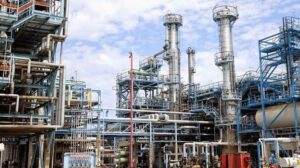
The Midstream and Downstream Gas Infrastructure Fund has attracted about N1.6tn in private investment using N671bn in public capital to support gas infrastructure development across Nigeria.
The fund’s intervention covers 31 projects and 205 infrastructure assets across the country, with the projects expected to deliver about 475 million standard cubic feet of gas per day to the domestic market when fully operational.
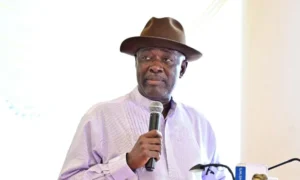
The Executive Director of MDGIF, Oluwole Adama, disclosed this on Thursday at the 2026 Annual Conference of the Association of Energy Correspondents of Abuja in Abuja.
Adama, who was represented by the fund’s Director of Strategy, Research and Deal Origination, Elvis Duruji, said MDGIF was established to use public funds to reduce investment risks and make gas infrastructure projects more attractive to private investors.
He said the fund had leveraged its capital to mobilise private investment equivalent to about 2.4 times its own contribution.
According to him, MDGIF was designed to turn projects that may initially appear commercially unviable into bankable investments, particularly those considered important to the national economy.
Duruji said 127 of the projects supported by the fund had commenced, while 10 had been completed and commissioned.
He added that the projects in the fund’s portfolio could contribute about 475 million standard cubic feet of gas daily to the domestic market once completed.
Duruji identified high financing costs, infrastructure gaps, regulatory uncertainty and technical and commercial risks as some of the factors limiting investment in Nigeria’s midstream gas sector.
The fund has also partnered with four flare-out awardees on projects expected to monetise about 444 million standard cubic feet of gas per day that would otherwise have been flared.
The projects are also expected to eliminate about 2,845 metric tonnes of emissions daily.
Beyond gas infrastructure, MDGIF has partnered with 30 unincorporated joint ventures and an incorporated equipment leasing company covering compressed natural gas facilities.
The partnerships include 20 CNG mother stations, more than 80 daughter stations and another 75 daughter stations through the equipment leasing company.
One of the projects supported by the fund is a five million standard cubic feet per day mini-LNG plant being developed by Topline Limited in Delta State.
Duruji said the project had spent about three years seeking financing before partnering with MDGIF and was now expected to be commissioned within the next few months.
Meanwhile, the Minister of State for Petroleum Resources (Gas), Ekperikpe Ekpo, called for sustained investment, policy stability and regulatory certainty to strengthen Nigeria’s oil and gas industry.
Ekpo said the country needed to create an investment environment that would enable its petroleum resources to contribute to industrialisation, job creation, infrastructure development and improved living standards.
He identified policy stability, regulatory certainty, competitive fiscal terms, security and efficient project execution as key requirements for attracting long-term investment.
The Chief Executive of the Nigerian Upstream Regulatory Commission, Oritsemeyiwa Eyesan, said Nigeria must focus on converting its petroleum resources into economic value rather than concentrating solely on the size of its reserves.
Eyesan disclosed that the commission had approved Field Development Plans representing more than $57bn in investment since 2024.
She added that 22 major offshore projects expected between 2026 and 2030 had estimated investment potential of between $30bn and $50bn.
The conference, themed “Sustaining Oil and Gas Investment in Nigeria Amid Energy Transition,” brought together government officials, regulators, industry operators and energy correspondents to discuss ways of sustaining investment in Nigeria’s oil and gas sector as global energy markets shift towards cleaner sources.