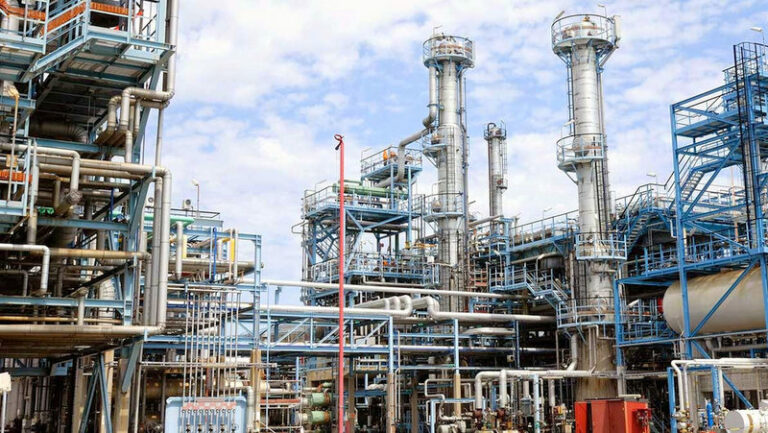
Workers at the Port Harcourt Refining Company have threatened to shut down operations at the facility if management fails to resolve issues surrounding seven months of unpaid salaries and a newly approved salary structure.
Members of the refinery’s Support Staff Union staged a protest at the facility in Eleme, Rivers State, on Monday, blocking the entrance and temporarily disrupting activities.
The workers are demanding that the new remuneration package approved by the Group Chief Executive Officer of the Nigerian National Petroleum Company Limited, Bayo Ojulari, be implemented immediately.
According to the union, the revised salary structure was approved to take effect from October 1, 2026, but has yet to be implemented by the refinery management.
The workers issued a 48-hour ultimatum to the NNPCL management, warning that failure to meet their demands would lead to a complete shutdown of the refinery.
Apart from the salary arrears, the union is asking for a N1 million housing or rent relief for eligible support staff and payment of other outstanding entitlements.
The workers also want better communication between the refinery management and recognised labour representatives on issues concerning staff welfare.
During the protest, the union accused the refinery coordinator of delaying the implementation of the approved salary structure and called for intervention from President Bola Tinubu.
The chairman of the PHRC Support Staff Union, Bennett Isy, said workers had continued to face financial difficulties because of the unpaid salaries.
He warned that the union would prevent access to the refinery if the issues were not resolved within the 48-hour deadline.
Some workers also raised concerns about inadequate medical support and the risks associated with working at the refinery.
One of the protesters, Godspower Nwakanji, said workers had spent years at the facility without adequate medical attention and appealed to the Federal Government to intervene.
The dispute comes as the Port Harcourt refinery remains part of Nigeria’s efforts to restore domestic refining capacity and reduce dependence on imported petroleum products.