Nigeria’s electricity challenges are expected to continue into 2027 as the Federal Government postpones the settlement of its outstanding N3.3tn debt to power generation companies, raising concerns over liquidity and investment across the electricity industry.
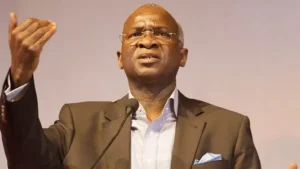
The Minister of Power, Joseph Tegbe, disclosed that the government had so far paid N1.23tn of the outstanding obligations, which were negotiated down from an initial N6tn.
Speaking during an interview on Arise News, Tegbe said the government was exploring alternative arrangements to clear the remaining debt, including offsetting some obligations against royalties and corporate income tax.
He also revealed that discussions were ongoing with the Nigerian National Petroleum Company Limited (NNPC) to reduce gas supply costs for electricity generation companies.
According to the minister, the government expects to complete the outstanding payments next year through a combination of these arrangements.
Tegbe identified institutional weaknesses as a major obstacle to improving electricity supply, arguing that about 80 per cent of the sector’s problems were linked to human and organisational factors, while technical challenges accounted for the remaining 20 per cent.
He cited poor coordination among industry operators, weak collaboration, inadequate liquidity and governance problems as factors affecting the performance of the electricity market.
The minister also criticised previous investment decisions, saying several projects had received funding without adequate consideration of their potential impact on electricity supply.
He said the ministry was reviewing existing projects to redirect resources towards initiatives capable of improving generation, transmission and distribution.
As part of efforts to address the country’s transmission limitations, the Federal Government is also pursuing a proposed $2bn East-West Super Grid project.
The project, according to Tegbe, is expected to increase electricity transmission capacity from approximately 4,000 megawatts to 19,000 megawatts.
The proposed network will connect Funtua, Gwagwalada, Ikot Ekpene, Benin, Epe and Ilorin, with procurement activities already underway and completion projected within two years.
However, energy economist and Professor Emeritus of Petroleum Economics, Wumi Iledare, argued that Nigeria’s electricity problems required fundamental institutional reforms rather than changes in leadership alone.
He maintained that persistent power failures reflected deeper weaknesses in the institutions responsible for managing the sector.
Iledare also supported decentralisation as a means of encouraging competition, attracting investment and increasing participation by state governments.
However, he stressed that decentralisation would only deliver meaningful results if supported by effective regulation, strong institutions and accountability mechanisms.
He said the success of electricity sector reforms should ultimately be measured by improvements in power availability, affordability, reliability and accessibility.
Meanwhile, checks by Energy Vanguard indicated that several households and businesses across the country had experienced prolonged periods of irregular electricity supply.
Industry data also showed that more than 3,000MW of electricity was available for distribution nationwide, highlighting the continuing gap between available supply and the country’s power requirements.