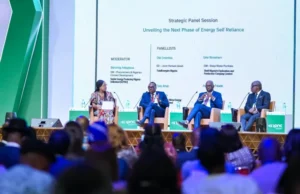
The European Union (EU) has committed €10.4 million to the Nigeria Solar for Health Project (NISHP), a groundbreaking initiative designed to bring reliable and sustainable solar energy to primary healthcare centers across Nigeria. The announcement was made during the Project Developers Roundtable Workshop held in Abuja on Tuesday.
Inga Stephanowicz, Head of Section, Green & Digital Economy, EU, emphasized the project’s importance: “This €10.4 million initiative marks a milestone in enhancing Nigeria’s healthcare sector by providing 24-hour access to clean, efficient, and reliable energy to participating public healthcare facilities.”
The NISHP aims to boost healthcare services and outcomes by ensuring uninterrupted power supply, crucial for medical care, vaccine storage, and emergency services. Stephanowicz added, “By working together with the Nigerian government, private sector entities, and local communities, the EU is supporting Nigeria’s development goals and promoting a brighter future for its citizens.”
The project will provide solar power to 45 healthcare facilities in selected states, including Abia, Akwa Ibom, Ogun, Plateau, and Enugu, with more states set to join. Nasiru Bello, Team Lead of NISHP, noted the wider impact, saying, “By leveraging solar power, Nigeria can improve healthcare outcomes, increase access to electricity, and promote economic growth.”
Bello also highlighted the project’s potential beyond healthcare: “Electrifying small and medium-sized enterprises and telecom towers near health facilities will drive community development.”
Stakeholders like Tinyan Ogiehor, Stakeholders Engagement Expert for NISHP, stressed the environmental benefits, stating, “By reducing reliance on fossil fuels, Nigeria can mitigate climate change and promote sustainable energy solutions.”
The project, running from 2024 to 2027, represents a key partnership between the EU and Nigeria, setting a model for renewable energy initiatives across Africa. As Bello concluded, “This is a step in the right direction towards a brighter, more sustainable future for Nigeria’s healthcare sector.”