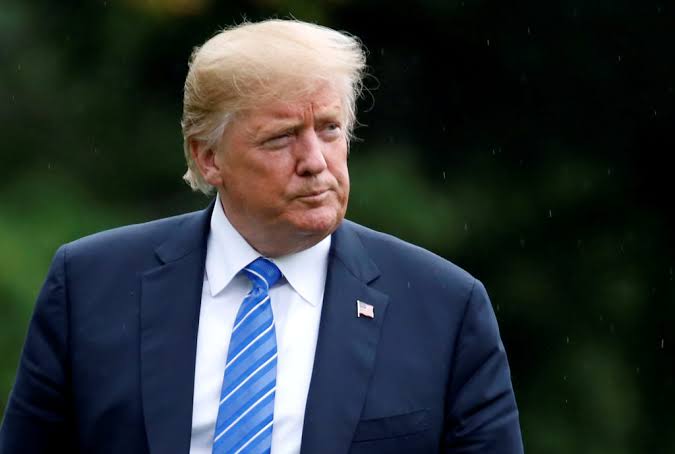
In a stunning announcement last Tuesday in Riyadh, U.S. President Donald Trump declared the lifting of economic sanctions on Syria, ending 25 years of frozen relations between the two countries.
The next day, Trump appeared in a historic photo alongside Syria’s Ahmad al-Shara and Saudi Arabia’s Prince Mohammed bin Salman at the Royal Palace, symbolizing the unexpected diplomatic breakthrough.
“I’m lifting the sanctions to make them great,” Trump proclaimed, in what many are calling a classic Trump surprise—abrupt, theatrical, and entirely unforeseen by even his own advisors.
The decision comes after 14 years of brutal war and Western sanctions that devastated Syria’s economy and crushed its working-class population. Though no clear economic recovery plan has been outlined, the announcement triggered celebrations across Syrian cities. Crowds in Damascus and Aleppo chanted revolution-era slogans, with renewed hope echoing in the streets: “One, one, one, the Syrian people are one.”
Since the fall of Bashar al-Assad in December, the new government under Hayat Tahrir al-Sham (HTS) has made lifting sanctions a cornerstone of its reconstruction efforts. Yet, the nation remains crippled by inflation, fuel shortages, and widespread poverty. Over 14 million Syrians—69% of the population—live below the poverty line. Electricity is limited to a few hours per day, and bread prices have skyrocketed eightfold since late last year.
Fatima Sayd, a 32-year-old agricultural engineer, explained the daily reality: “The sanctions affect all sectors; we are not an independent country… many of the companies belong to the Assad family or their associates. All these businesses triggered a vicious cycle under the sanctions.”
Critics argue that while sanctions were originally intended to punish Assad for his violent repression and use of chemical weapons, they also crippled Syria’s broader economy, driving a rise in black-market activity and deepening public suffering. The country’s GDP has shrunk by 53% in the last decade, with an 84% drop in overall economic activity. More than half the workforce is now unemployed.
Zaid Samad, a 45-year-old taxi driver, voiced the economic toll: “The sanctions destroyed our industry. There is no capacity here to produce basic necessities. We can’t import, and many people have lost their jobs.”
The Trump announcement could immediately unlock a $29 million monthly payment from Qatar to support Syria’s public sector salaries—a deal previously blocked due to U.S. sanctions. Removing trade restrictions may also invite foreign investment, allowing small businesses to access credit and rebuild what has been lost.
However, Trump’s pivot carries geopolitical implications. His support for Syria is conditional in tone but not in practice. According to spokesperson Karoline Leavitt, Trump urged Syria to normalize relations with Israel via the Abraham Accords—an unlikely move, given Israel’s occupation of the Golan Heights and repeated airstrikes on Syrian territory. Al-Shara has acknowledged talks with Israel but remains cautious.
Trump also requested that Syria combat ISIS resurgence, manage detention centers in the northeast, and deport Palestinian “terrorists.” With U.S. support for Kurdish-led Syrian Democratic Forces waning, these responsibilities now shift to Damascus, raising concerns about regional stability.
The lifting of sanctions is seen as part of Trump’s broader Middle East strategy, focused on sidelining Iran and China while aligning with Gulf allies. Recent U.S. agreements with Saudi Arabia and the UAE—worth $600 billion and $1.4 trillion respectively—underscore the business-first approach.
“Syria is collapsing on the brink of an economic catastrophe,” the article notes. While the sanctions’ end brings hope, many Syrians remain wary. As one analyst put it, “The country will be governed from the outside by economic force at the service of foreign corporations. Ultimately, what matters to the American president is business.”