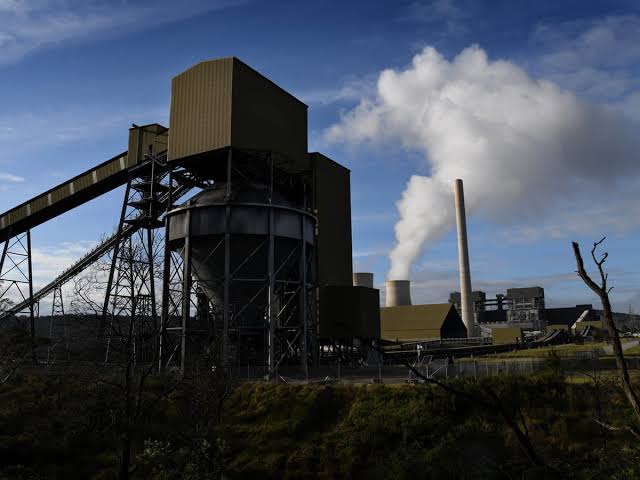
Nigeria’s oil and gas industry is under renewed scrutiny as gas flaring levels hit a four-year high, even as factories across the country struggle with fuel shortages and spiraling energy costs.
Between January and May 2025, operators burned off over 154 million standard cubic feet of gas — the worst first-quarter flare figure since 2020 — according to data from NOSDRA and the Nigerian Oil Spill Monitor. For all of 2024, over 301 million scf was flared, translating to a loss of $1.1 billion in potential revenue. Less than 60 percent of that is recoverable through penalties.
This surge comes despite Nigeria’s public pledge to eliminate routine flaring by 2030. The government has repeatedly backed programmes like the Nigerian Gas Flare Commercialisation Programme (NGFCP) and signed on to global initiatives, yet enforcement and project execution remain weak.
Energy analysts attribute the problem to poor infrastructure, weak regulation, and delays in key policy implementation. Oyinkepreye Orodu, an energy researcher, criticized the slow pace of Nigeria’s “Decade of Gas” initiative, noting that nearly half the timeline has passed with minimal progress.
Meanwhile, domestic industries that depend on gas are facing an uphill battle. Power shortages and rising fuel costs have forced many manufacturers to scale down or shut operations. Several gas-fired plants are running below capacity, further deepening the country’s power crisis.
The Transmission Company of Nigeria (TCN) confirmed that falling gas supply has dragged down electricity generation, leaving distribution companies with less power for homes and industries.
At a recent industry event, energy stakeholders called for urgent reforms. Daere Akobo, Chairman of PANA Holdings, stressed the need to bridge the gap between Nigeria’s installed power capacity and actual output, suggesting a privately-led Energy Council to help guide technical reforms in the sector.
Despite several major gas infrastructure projects, such as the AKK and Nigeria-Morocco pipelines, the Nigerian Upstream Petroleum Regulatory Commission (NUPRC) has warned of a looming shortfall. With demand growing by nearly 17 percent annually, supply could fall behind by over 3 billion scf per day by the end of the decade.
Legally, gas flaring is a punishable offence under the Petroleum Industry Act (PIA), except under special approvals or emergency conditions. Newer regulations also set stricter limits and fines, but actual enforcement remains inconsistent.
Stakeholders like Jide Pratts of AIONA argue that large-scale gas capture is the way forward, with projects like the AKK pipeline offering hope — if backed by real investment and policy will. But concerns remain over whether small local flare gas developers can secure the funding needed to bring their projects to life.
Without faster action, experts warn that Nigeria risks not only missing its climate targets but also deepening the energy crisis already choking its industrial sector.