Nigeria’s rising oil production costs are being driven not by technology or equipment, but by something far more basic; security.
According to Bayo Ojulari, Group CEO of the Nigerian National Petroleum Company Limited (NNPCL), protecting pipelines from sabotage and oil theft has become so costly that it now accounts for a major chunk of Nigeria’s per-barrel production cost, currently estimated between $25 and $30.
That figure is nearly triple what it costs to extract crude in Saudi Arabia and well above the global average. “We’ve had to build a completely new model for pipeline security,” Ojulari said during an interview in Vienna at the OPEC International Seminar. “It’s working—but it hasn’t come cheap.”
Rather than rely solely on armed forces, Nigeria has enlisted local surveillance teams from host communities to help secure oil infrastructure. The goal: ensure safety, create jobs, and build lasting partnerships with communities that have long been neglected.
Ojulari insists this collaborative method is more reliable than traditional policing, but admits it pushed operating costs beyond the $20 mark—making Nigeria’s oil some of the most expensive in the world to produce.
On whether these costs will come down, he’s optimistic: “With continued stability, we expect gradual reductions over time.”
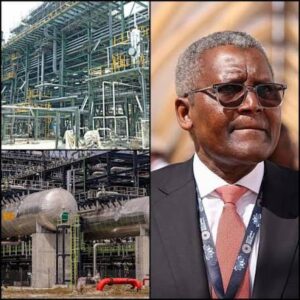
Ojulari also weighed in on Nigeria’s relationship with the privately owned Dangote Refinery, emphasizing that the refinery has no obligation to buy local crude. “It’s a business. We’re not forcing anything—it’s a matter of supply and demand,” he said. All crude transactions, he explained, are to be done on a willing buyer, willing seller basis.
As for the country’s broader production targets, Nigeria is slowly increasing output, now at 1.63 million barrels per day, including condensates. The target is to hit 1.9 million by year’s end and exceed 2 million by 2027. Gas output is also expected to rise from 7 to 10 billion cubic feet in that period.
On the state-owned refineries, Ojulari acknowledged that recent repair efforts haven’t delivered as expected. The NNPC is now reassessing its approach and may even consider selling off some assets, depending on the outcome of a strategic review set to conclude this year.
Beyond Nigeria’s borders, he called for greater investment in African energy access, noting that millions across the continent still depend on wood and charcoal. “It’s not just about oil,” he said. “It’s about energy justice.”
Finally, he voiced strong support for recent OPEC+ decisions aimed at stabilizing the market, saying a balanced oil market benefits both producers and consumers in the long run.