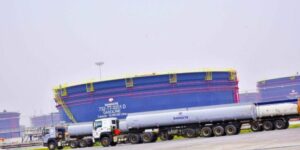
The Nigerian National Petroleum Company Limited (NNPCL) has put to rest growing speculation about the potential sale of the Port Harcourt Refinery, reaffirming its decision to retain ownership and push forward with an advanced rehabilitation programme.
Group Chief Executive Officer, Bashir Ojulari, made this clear during a company-wide town hall meeting held Tuesday at the NNPCL Towers in Abuja. According to him, recent assessments have shown that operating the refinery before fully completing its refurbishment would be commercially unwise and technically premature.
Ojulari clarified that NNPCL’s position hasn’t changed, despite earlier public remarks suggesting that “all options are on the table”—a comment made at the 2025 OPEC Seminar in Vienna that sparked widespread debate about possible divestment of the company’s refining assets.
Providing context, he explained that ongoing technical and financial reviews of the Port Harcourt, Kaduna, and Warri refineries have revealed the need for deeper technical partnerships to ensure the facilities meet global standards. As a result, selling the refinery would not only halt that progress but also risk further financial losses, he said.
During the meeting, executive vice presidents from various arms of the company—including Upstream, Downstream, Finance, and Gas—provided updates on operations, current reforms, and strategic focus areas. The event reportedly boosted staff morale, with employees expressing confidence in the leadership’s long-term vision.
NNPCL stressed that its strategy aligns with national energy security goals and the preservation of vital state-owned infrastructure. The company reiterated its core mission to deliver reliable, transparent, and commercially viable energy services to the Nigerian people.
Ojulari wrapped up the session with a commitment to keeping Nigerians at the heart of the company’s transformation efforts: “We remain a performance-driven national energy champion, dedicated to transparency and focused on long-term impact.”
The update comes amid growing calls for accountability in Nigeria’s downstream sector and heightened public interest in the future of local refining capacity.