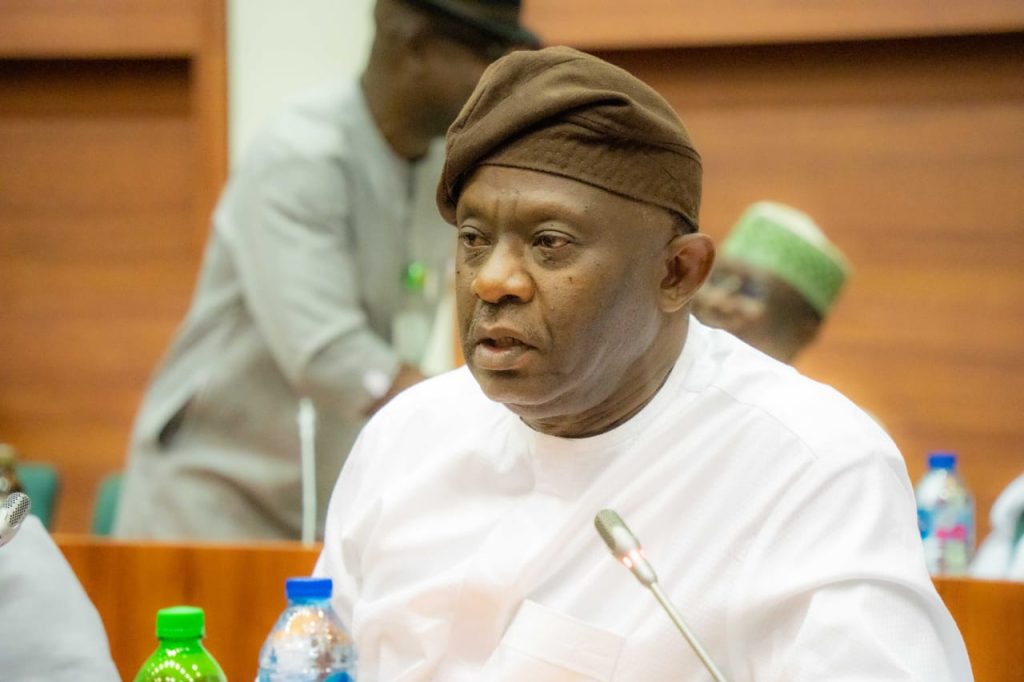
Kogi West Senator, Sunday Karimi, has cautioned the Petroleum and Natural Gas Senior Staff Association of Nigeria (PENGASSAN) against its directive to halt operations linked to the Dangote Refinery, warning that such action could cripple the economy and discourage future investments.
The senator, in a statement on Monday, described the union’s decision to suspend gas and crude supplies to the $20 billion refinery as an act of “economic sabotage,” stressing that no serious investor would risk capital in a country where private businesses could be destabilized at will.
PENGASSAN had last weekend ordered its members to withdraw services from facilities, including the refinery, sparking concerns over Nigeria’s energy stability.
Karimi urged the Federal Government to intervene swiftly, noting that thousands of Nigerians are directly and indirectly employed at the facility. According to him, while about 800 workers had reportedly been laid off, the refinery still maintains over 3,000 employees and supports many contractors and suppliers.
Drawing parallels with other sectors, Karimi argued that private companies in finance, aviation, electricity and education often set limits on union activities without backlash. He cited the example of Nigeria’s private universities, where academic unions like ASUU are absent, and the financial industry, where unions lost influence following deregulation.
The senator recalled that labour resistance had once stalled former President Olusegun Obasanjo’s plan to sell the Port Harcourt refinery to Aliko Dangote in 2007, forcing the billionaire industrialist to build his own facility. He contrasted this with state-run refineries that continue to drain public funds through repeated maintenance without results.
Karimi accused some unions of protecting their own interests through levies collected from workers at dysfunctional government plants, rather than embracing reforms that encourage efficiency.
The refinery, regarded as one of the world’s largest single-train facilities, has been at the centre of a growing standoff between organised labour and private investors. While PENGASSAN insists its actions are part of an industrial strategy, political figures and sections of the public have criticised the move as harmful to Nigeria’s already fragile energy sector.