The Federal Government has restated its determination to complete the long-delayed Brass Gas Project in Bayelsa State, describing it as a major step toward boosting industrial development and gas utilisation in Nigeria.
Minister of State for Petroleum Resources (Gas), Ekperikpe Ekpo, announced the renewed push during a two-day stakeholders’ workshop on the project in Abuja. He said the government is working to resolve all outstanding issues and ensure the project reaches financial close and construction begins soon.
According to Ekpo, the Brass Gas initiative aligns with President Bola Tinubu’s Renewed Hope Agenda, which prioritises natural gas as a key driver of energy transition, economic diversification, and industrial growth.
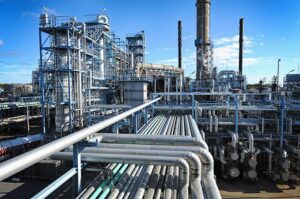
The minister explained that the project—comprising the Brass Methanol Plant, Gas Processing Plant, and the Brass Free Zone Infrastructure—will form the core of a new industrial hub known as the Brass Oil and Gas City. This hub, he noted, is expected to serve as a model for gas-powered industrial development across the country.
Ekpo said the Ministry of Petroleum Resources (Gas) is committed to ensuring that all regulatory, policy, and commercial frameworks around the project—such as gas supply agreements, licensing, and infrastructure integration—are “clear, bankable, and investor-friendly.”
He emphasised that the successful completion of the Brass Gas Project would create thousands of jobs, stimulate local industries, and deliver lasting benefits to communities in the Niger Delta.
The minister also praised the collaboration among the Nigerian National Petroleum Company Limited (NNPCL), Brass Fertiliser and Petrochemical Company Limited, Renaissance Joint Venture, and Afreximbank, calling it a strong example of public-private partnership in the energy sector.
The Managing Director of Brass Fertiliser and Petrochemical Company Limited, Ben Okoye, commended the government’s renewed focus on the project, noting that it would open new opportunities in technology transfer and industrial growth once operational.
Conceived over a decade ago, the $3.6 billion Brass Methanol Project is designed to convert about 350 million standard cubic feet of gas daily into 10,000 metric tonnes of methanol. When completed, it will boost domestic gas usage, curb gas flaring, and enhance Nigeria’s exports of petrochemical products.
After years of funding delays, the project has regained momentum under the Tinubu administration’s Decade of Gas initiative, which seeks to make natural gas the centerpiece of Nigeria’s industrial future.