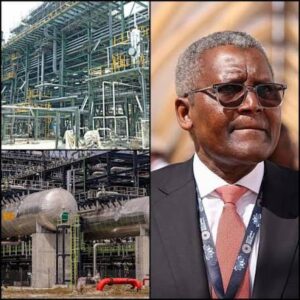
Nigeria’s domestic petrol supply recorded a strong rebound in December 2025, driven by increased output from the Dangote Petroleum Refinery, according to data from the Nigerian Midstream and Downstream Petroleum Regulatory Authority (NMDPRA).
The regulator’s December fact sheet shows that average daily supply of Premium Motor Spirit (PMS) rose to about 32 million litres, up from roughly 19.5 million litres per day in November.
The increase represents a 64 percent month-on-month jump and ranks among the most significant improvements since the Lekki-based refinery began phased operations.
Industry sources attribute the surge to improved operational efficiency and tighter coordination across the downstream sector following leadership and structural changes, which helped streamline engagement between regulators, refinery operators and product off-takers.
NMDPRA figures indicate that the Dangote Refinery supplied around 5.78 million litres of petrol per day to the domestic market in December. Output gains were supported by higher refinery utilisation and smoother evacuation of products to coastal depots, alongside increased truck distribution nationwide.
The refinery reportedly reached peak capacity utilisation of about 71 percent during the month, while average utilisation across Nigeria’s domestic refining assets climbed above 63 percent, signalling growing operational stability after earlier disruptions.
Improved local supply lifted Nigeria’s petrol sufficiency to an estimated 29 days in December, compared with tighter conditions in September and October when domestic production lagged demand.
While Nigeria’s official daily petrol demand benchmark for 2025 stands at about 50 million litres, actual truck-out volumes averaged 63.7 million litres per day in December. Regulators say the higher figure reflects cross-border demand and stockpiling ahead of the festive season.
The NMDPRA noted that the recovery in petrol availability was supported by increased output from the Dangote Refinery, strategic imports by the Nigerian National Petroleum Company Limited (NNPC) as supplier of last resort, and efforts to rebuild national fuel inventories. Additional volumes also came from cargoes initially scheduled for October but discharged in November.
Aliko Dangote, president and chief executive of Dangote Industries Limited, has reiterated that meeting domestic fuel needs remains the refinery’s priority, stressing the importance of ensuring reliable energy supply for Nigerians.
Analysts say sustained growth in local refining output is critical to cutting import dependence and easing pressure on pump prices as the refinery moves closer to full capacity. Petrol prices in November ranged between N910 and N982.50 per litre across major cities, reflecting ongoing sensitivity to exchange rates and global fuel costs.
Beyond petrol, performance across other products was mixed. Diesel supply from domestic refineries remained constrained due to shutdowns, while modular refineries contributed limited volumes. Liquefied petroleum gas (LPG), however, remained strong, with local production accounting for more than 70 percent of supply in December.
Market watchers expect Dangote Refinery’s role in the domestic fuel market to expand further in 2026 as operational bottlenecks ease and more processing units stabilise, positioning the facility as a key pillar of Nigeria’s fuel security in the post-subsidy era.