Kuwait has set an ambitious goal to boost its oil production capacity to 4 million barrels per day by 2035, up from its current output of just over 3 million barrels per day, according to the leadership of the country’s national oil company.
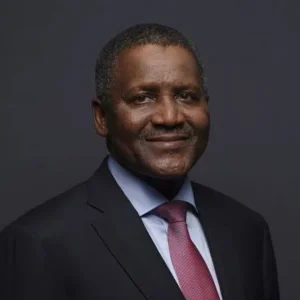
The plan was disclosed by Nawaf Al-Sabah, Chief Executive Officer and Deputy Chairman of Kuwait Petroleum Corporation (KPC), who said the expansion aligns with expectations that global oil demand will remain strong for decades. He noted that worldwide oil consumption could hover around 100 million barrels per day through 2050.
Kuwait, one of the founding members of OPEC, is currently the cartel’s fifth-largest producer, trailing Saudi Arabia, Iraq, Iran, and the United Arab Emirates. One major advantage supporting its expansion drive is its low production cost, which remains below $10 per barrel.
As part of the strategy to increase capacity, Kuwait is opening up its offshore energy sector to international players. Al-Sabah said foreign companies have shown growing interest in offshore exploration opportunities within the country.
Earlier this week, Prime Minister Sheikh Ahmad Abdullah Al-Ahmad Al-Sabah confirmed that Kuwait is preparing to invite global oil companies to participate in developing recently discovered offshore oil and gas fields.
The projects will be led by Kuwait Oil Company, a subsidiary of KPC, with technical and financial support from foreign partners.
In addition to upstream development, Kuwait is also considering new financing models for its energy infrastructure.
The government is in talks with international financial institutions to explore a lease and lease-back arrangement for the country’s crude oil pipeline network.
Reports have also pointed to a major midstream expansion plan, including a $7 billion pipeline project that could be opened to foreign investment.
The initiative is aimed at improving transport links between oilfields, export terminals, and processing facilities, while reducing pressure on public finances.
Looking ahead, Kuwait Oil Company plans to invest up to $3.9 billion in exploration drilling by 2030, reinforcing the country’s long-term commitment to expanding output and maintaining its position as a key global oil supplier.