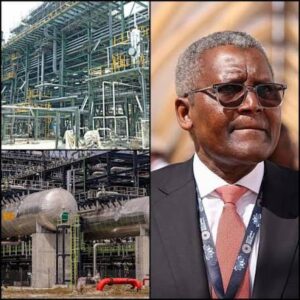
Former Vice President Atiku Abubakar has criticised the Nigerian National Petroleum Company Limited (NNPCL) over what he described as years of wasteful spending on the country’s refineries, insisting that public funds should no longer be used to maintain facilities that are not producing fuel.
Atiku’s reaction followed recent comments by NNPCL Group Chief Executive Officer, Bayo Ojulari, who stated that efforts to revive the Port Harcourt Refinery, as well as those in Warri and Kaduna, had amounted to a misuse of scarce resources. Ojulari made the remarks at the Nigeria International Energy Summit held in Abuja last week.
In a statement issued on Sunday, Atiku said the admission by NNPCL leadership confirmed his long-standing position that Nigeria’s refineries should be privatised instead of relying on repeated government funding.
According to him, billions of naira have been spent on salaries, maintenance and turnaround repairs for refineries that have failed to produce a single litre of petrol, a situation he described as economically unjustifiable.
The former vice president argued that continuing to inject public money into non-functional refineries does not serve the national interest, especially at a time when the country faces serious economic challenges.
Atiku recalled that his earlier calls for privatisation were met with criticism and accusations that he intended to sell national assets to cronies. However, he said recent developments have shown that the approach was based on economic reality rather than political motives.
He also faulted decades of turnaround maintenance programmes, noting that they have consumed billions of dollars without addressing fundamental issues such as weak technical capacity, poor management and lack of financial discipline.
Atiku further warned that recent attempts to revive the refineries were driven more by political pressure than sound economic planning, stressing that politics should not replace policies that can deliver sustainable results.
He advised the Federal Government to discontinue any proposed refinery partnerships that could repeat past failures, adding that Nigeria would have been better served by selling the refineries before embarking on costly rehabilitation projects that have increased public debt and reduced the value of the assets.