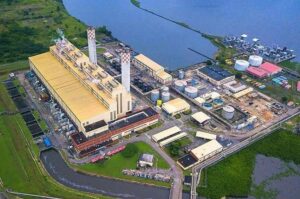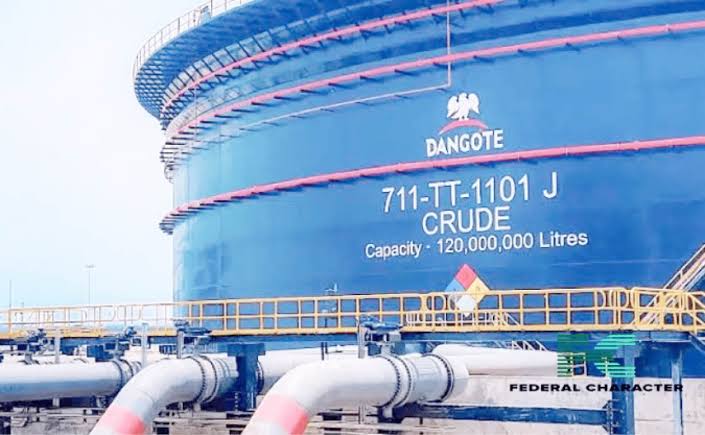
The is reshaping Nigeria’s oil sector by operating as a highly flexible, trading-focused facility rather than a traditional refinery tied to domestic crude pipelines. According to CEO David Bird, the $20 billion plant is modeled on global refining hubs like Rotterdam and Singapore, designed for maritime access, diverse crude sourcing, and seamless product exports.
Bird explained that the refinery buys crude from both Nigerian producers and international markets, instead of relying solely on its own upstream assets. “We’re a fully flexible merchant refinery,” he said, noting that the facility adjusts its operations daily based on market conditions and feedstock availability. The refinery has processed more than 25 types of crude and around 10 intermediate feedstocks so far.
About 30% of the feedstock comes from Nigerian crude under the naira-for-crude framework, another 30% is opportunistic local grades, and the remaining 40% is sourced internationally. This merchant approach exposes the refinery directly to global crude price swings, exchange rate movements, and refining margins.
Operational efficiency is central to profitability.
The refinery’s setup which includes crude distillation, hydrocrackers, reformers, and catalytic crackers allows it to convert heavier fractions into finished fuels. To maintain high utilization, intermediate feedstocks may be imported to keep units running at full capacity, a practice Bird compared to filling every seat on an airplane.
On product quality, Bird emphasized that imported blendstocks are upgraded internally, ensuring all fuels leaving the refinery meet Euro 5 standards with 50 parts-per-million sulfur. This marks a significant step up for West Africa, historically a destination for lower-quality fuels. He also called for strong regulation to maintain fair competition.
Bird concluded, “We are ready to compete on import parity pricing, but there must be a level playing field on quality to prevent market distortions.”