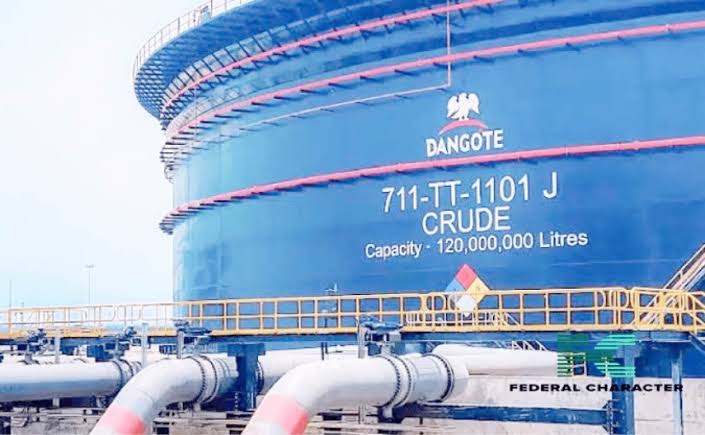
Africa’s financial markets may soon face a defining test as billionaire industrialist Aliko Dangote prepares to sell a stake in his flagship refinery through a public listing that could become one of the continent’s biggest share offers.
Plans are underway to float about 10 percent of the oil-refining business, with the primary listing expected in Nigeria and possible secondary listings across other African exchanges, including South Africa, Ghana and Kenya. The move is aimed at raising fresh capital to fund the refinery’s next phase of growth while widening investor participation beyond Nigeria.
The refinery, located in Lagos, has a processing capacity of 650,000 barrels per day and began commercial operations in 2024 after years of construction. Rising global oil prices and strong regional demand for refined products have added momentum to the timing of the planned offer, which could come in the second half of 2026.
Market observers say this would go far beyond a conventional IPO. A multi-exchange listing of this size is rare in Africa and is being viewed as a bold attempt to knit together fragmented capital markets across the continent.
Analysts believe the transaction will effectively test whether African exchanges can mobilise enough domestic savings to finance large industrial assets without leaning heavily on foreign capital. A successful outing could encourage more cross-border listings and strengthen collaboration between stock markets that often operate in isolation.
Ayokunle Olubunmi of Agusto & Co noted that several African exchanges have limited trading activity and few highly liquid stocks. According to him, the presence of a well-known industrial giant on multiple bourses could stimulate activity and attract both local and international investors.
He added that cross-listing would also remove barriers for investors who find it difficult to access certain markets directly, allowing them to buy the same stock on another African exchange.
The opportunity becomes clearer when market sizes are compared. The Johannesburg Stock Exchange is valued at over $1 trillion, while the Ghana Stock Exchange and the Nairobi Securities Exchange are worth only a fraction of that. A high-profile listing spread across these markets could help deepen liquidity and improve investor interest.
Over the last two decades, Africa’s equity markets have expanded significantly, but they still lag behind other regions relative to economic output. This offering is therefore seen as a potential catalyst for change.
Some commentators have likened the planned IPO to the historic public listing of Reliance in India in the late 1970s, led by Dhirubhai Ambani. That listing is widely credited with drawing India’s middle class into equity investing and transforming the country’s investment culture.
Observers suggest a similar effect could occur in Nigeria if the Dangote offer attracts widespread retail participation. Nigeria has not seen a major IPO in several years, and rising financial inclusion may create favourable conditions for ordinary savers to become shareholders.
Nigeria’s stock market, valued at just over $100 billion, remains small relative to the size of the economy, and many listed companies have limited free-floating shares. These structural issues could affect how the market absorbs an offering of this magnitude.
However, analysts say brand familiarity may work in Dangote’s favour. The conglomerate’s presence in cement, sugar and other consumer-facing sectors means many Nigerians already recognise the brand, which could make the idea of buying shares less intimidating for first-time investors.
The IPO could also reposition the refinery not simply as a Nigerian asset but as a pan-African industrial project open to investors across the continent.
Beyond raising capital, the listing fits into Dangote’s wider ambition to tap Africa’s vast pools of institutional funds held by pension managers, banks and asset managers. The businessman has outlined plans to build a $100 billion conglomerate within a few years, backed by tens of billions of dollars in investments across Africa.
If the IPO succeeds, it could revive activity in Nigeria’s primary market, encourage other African corporates to consider listings, and strengthen equity financing as a viable route for large projects.
Yet, risks remain. Limited liquidity, low investor education and concentrated ownership structures in many markets could dampen demand or affect performance after listing.
For Africa’s capital markets, the outcome of this IPO may serve as a clear signal: either proof that local markets can support billion-dollar industrial ventures, or a reminder of the structural reforms still required to reach that goal.