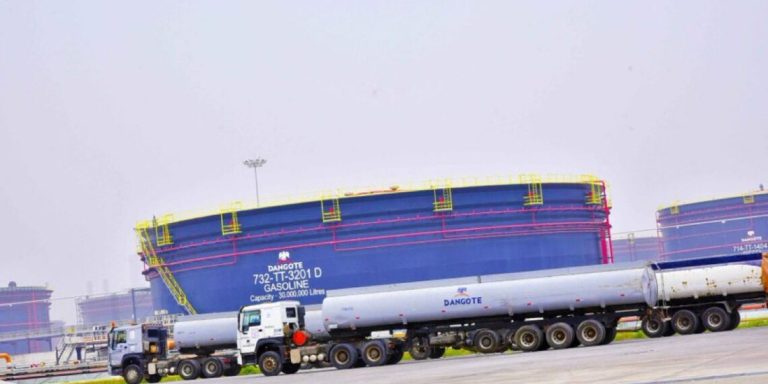
The Dangote Petroleum Refinery’s decision to tie its free delivery offer to bulk orders of at least 500,000 litres of petrol has sparked criticism from independent marketers, who say the requirement is far beyond their financial reach.
Under the new policy, only marketers who purchase half a million litres or more—about 11 trucks at 45,000 litres each—can benefit from the refinery’s free transport scheme. At the current depot price of ₦820 per litre, that means raising over ₦400 million upfront.
For many smaller operators, that figure is simply unattainable. Chinedu Ukadike, spokesman of the Independent Petroleum Marketers Association of Nigeria (IPMAN), confirmed that members are already considering pooling resources to qualify. “Buying one truck used to be enough. Now, unless marketers form groups, middlemen will take over again,” he said.
Energy experts have also voiced concern. Olatide Jeremiah, CEO of Petroleumprice.ng, described the benchmark as unrealistic. “Most station owners can’t raise that much capital. This policy could hand the advantage back to wholesalers, which defeats the purpose of direct delivery,” he warned.
Dangote Refinery rolled out the free delivery scheme earlier this month with 1,000 CNG-powered trucks, pitching it as a way to cut distribution costs and reduce pump prices nationwide. Major marketers such as Conoil and Eterna have already signed on.
But the policy has angered road transport operators. The National Association of Road Transport Owners (NARTO) argued that the initiative undermines existing agreements with truck owners who borrowed heavily to finance their fleets. NARTO President Yusuf Othman also claimed the plan conflicts with guidelines in the Petroleum Industry Act.
Industry watchers fear the new rule could inadvertently recreate the same market distortions Dangote aimed to eliminate—keeping depot operators and middlemen relevant, while excluding small filling station owners.
Analysts say adjusting the policy to allow purchases on a per-truck basis would make it fairer and more inclusive. For now, IPMAN is lobbying for collective buying as stakeholders await possible revisions from the refinery.