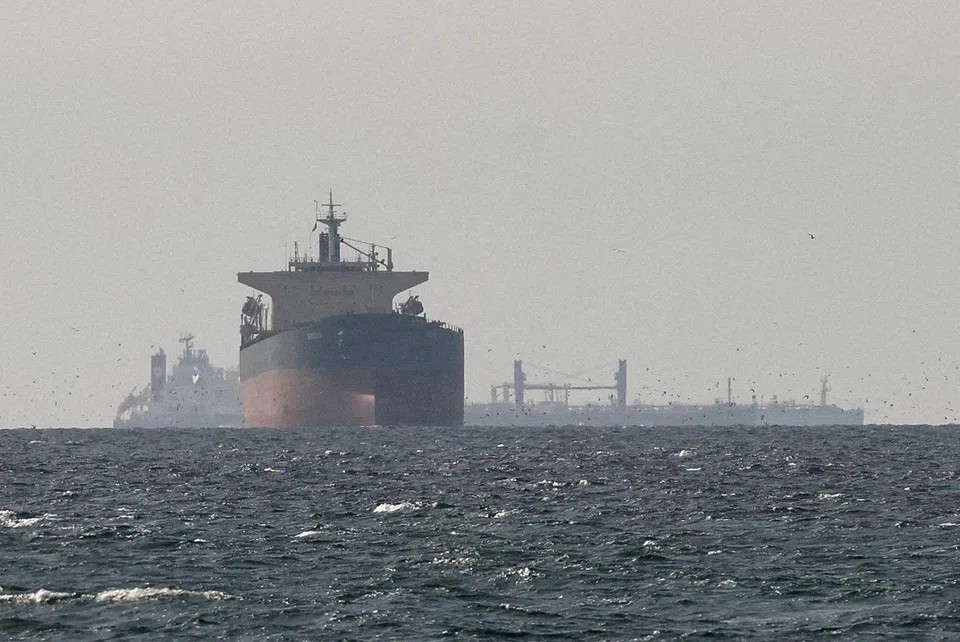
Iran has begun allowing certain African-linked commercial ships to pass through the strategically important Strait of Hormuz following a tentative ceasefire between Tehran and the United States – yet overall maritime traffic remains far below normal levels.
Among the first non-Iranian vessels to transit the narrow waterway since the truce was declared were an oil tanker flying Gabon’s flag, which carried fuel oil from the United Arab Emirates toward India, and a Liberia-flagged tanker that left Iran’s major port of Bandar Abbas before successfully exiting the Persian Gulf.
Not all attempts were successful. A liquefied natural gas vessel registered in Botswana was ordered to turn back by Iran’s Islamic Revolutionary Guard Corps after trying to follow a prescribed route out of the Gulf.
Iranian authorities now require ships to coordinate movements with the Guard and follow designated paths amid ongoing security concerns.
Shipping data shows that movement through the strait has only slowly resumed. At least a dozen vessels have crossed since the ceasefire – a fraction of the more than 100 ships that typically sail through each day while more than 600 vessels, including roughly 325 tankers, remain stuck in Gulf waters. The limited flow underscores how much control Tehran continues to exert over this key oil export route.
Iran’s ambassador to South Africa, Mansour Shakib Mehr, has denied that the corridor is closed entirely, saying restrictions apply mainly to vessels linked to the US and Israel. He added that Iran has allowed shipments bound for countries like China and India under special conditions and could consider similar arrangements with South Africa.
The disruption in shipping has extended concerns about global energy security. Although producers such as Nigeria and Angola have helped ease supply pressures in parts of Africa, markets remain exposed to price volatility if the slowdown in Hormuz persists. Iranian officials are reportedly considering formalising control of the route, including proposals to charge tolls for passage, potentially adding to the cost pressures faced by global shippers.
Tensions between Tehran and Washington continue to shape developments. US leaders have criticised Iran’s handling of the situation, warning against attempts to impose fees on passing vessels, while Iranian officials claim the United States has not fully complied with ceasefire commitments.