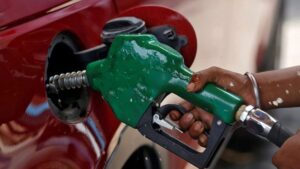
Nigeria’s average pump price for Premium Motor Spirit dropped to ₦1,051.47 in February 2026, reflecting a 15.6 percent decline compared to the same period last year, according to fresh figures from the National Bureau of Statistics.
The new data shows that petrol, which sold for an average of ₦1,245.80 in February 2025, became cheaper over the 12-month period. However, prices edged up slightly when compared to January 2026, rising by 1.62 percent from ₦1,034.76.
The statistics agency said the information was gathered from retail outlets spread across Nigeria’s 774 local government areas, covering all states and the Federal Capital Territory. Thousands of consumers were surveyed during the exercise, which involved extensive fieldwork and quality checks to ensure accuracy.
A closer look at state figures reveals notable differences in what motorists pay at the pump. Yobe State posted the highest average price at ₦1,134.73 per litre. Sokoto State and Akwa Ibom State also ranked among the most expensive.
On the other hand, Lagos State recorded the lowest average price at ₦966.61. It was followed by Oyo State at ₦973.45 and Kaduna State at ₦1,000.07, underlining regional gaps in fuel costs.
Zonal comparisons show a similar pattern. The North East had the highest regional average, while the South West recorded the lowest. Analysts often attribute such variations to factors such as transport costs, distribution networks and distance from supply depots.
Despite the year-on-year relief, the marginal rise from January suggests that stability in pump prices remains fragile. Industry observers note that petrol prices continue to react to supply conditions, exchange rate movements and logistical challenges in the downstream sector.
According to the NBS, the estimates were based on actual household spending on petrol and prices paid at retail stations, with oversight from monitoring teams to maintain data integrity.
Fuel prices remain closely watched across Nigeria because of their influence on transport fares, food costs and overall living expenses. While February’s figures point to a broader annual decline, the monthly increase signals that cost pressures have not completely eased.