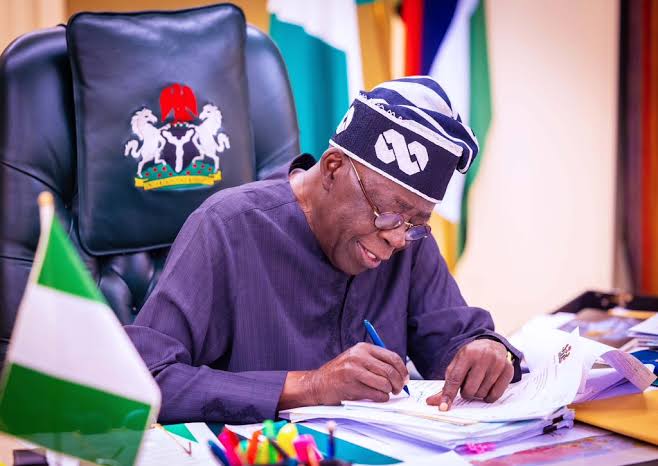
President Bola Tinubu has authorised a N3.3 trillion settlement plan aimed at resolving long-standing financial obligations in Nigeria’s electricity industry, a move the Federal Government says will help restore stability across the power value chain.
In a statement issued by presidential spokesman Bayo Onanuga, the government said the decision followed a comprehensive review of legacy liabilities that accumulated between February 2015 and March 2025 under the Presidential Power Sector Financial Reforms Programme.
After verification, N3.3tn was agreed as a final settlement figure. Authorities say implementation is already underway, with 15 generation companies signing agreements valued at N2.3tn. The government has so far sourced N501bn for the exercise, out of which N223bn has been paid, with additional disbursements in progress.
Officials believe the payments will ease liquidity pressure on generation companies, enable gas suppliers to resume consistent deliveries, and ultimately improve electricity supply nationwide.
The President’s Special Adviser on Energy, Olu Arowolo-Verheijen, said the initiative is designed not only to clear old debts but also to rebuild trust within the sector. According to her, ensuring that gas producers and power plants are paid is essential to making the system more reliable.
She added that the intervention aligns with broader reforms such as improved metering and service-reflective tariffs, which connect electricity bills more closely to the quality of supply received by consumers. The government also intends to prioritise power delivery to businesses and industries to stimulate economic activity and job creation.
Tinubu commended stakeholders involved in resolving the sector’s long-running financial issues and confirmed that a second phase of the programme will commence later this quarter.
The development comes amid concerns raised by power generation companies over mounting unpaid invoices. The Chief Executive Officer of the Association of Power Generation Companies, Joy Ogaji, recently revealed that gas suppliers had reduced or stopped supply to thermal plants because of debts running into trillions of naira.
Ogaji stated that the Nigerian Bulk Electricity Trading Plc had been unable to fully pay for electricity generated since the sector’s privatisation, leading to a growing shortfall. She estimated the industry’s total debt to generation companies at nearly N7tn as of March 2026, with thermal plants accounting for most of the outstanding amount due to their heavy reliance on gas.
Her figures differ significantly from the N3.3tn settlement approved by the President, highlighting the scale of unresolved financial issues still facing the electricity sector.