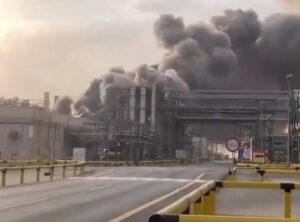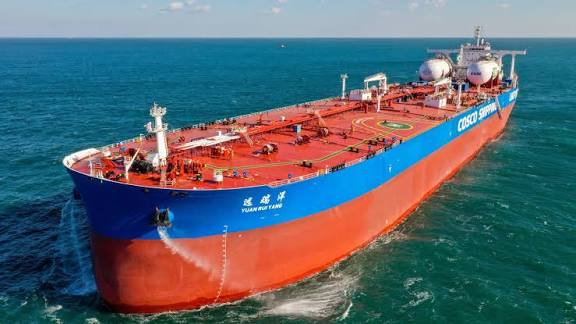
Qatar has temporarily suspended its liquefied natural gas (LNG) operations, raising concerns of global supply shortages as tensions escalate in the U.S.-Israeli conflict with Iran.
State-owned Qatar Energy, responsible for roughly 20% of the world’s LNG exports, declared force majeure on shipments, signaling that normal production may not resume for several weeks.
Sources familiar with the situation said restarting the facilities will take at least two weeks, followed by another two weeks to reach full production capacity.
The shutdown affects gas flowing to major markets in Asia and Europe, including China, Japan, India, South Korea, and Pakistan, where Qatar is a key supplier.
Shipping around the Strait of Hormuz has slowed almost to a halt, preventing LNG cargoes from leaving the country and forcing the gradual shutdown of liquefaction processes.
Experts warn the halt could trigger a gas market shock greater than the 2022 crisis when Russian pipeline supplies to Europe were cut. “Nothing can replace Qatari LNG,” said Saul Kavonic, head of energy research at MST Marquee. “If the shutdown extends, gas prices may approach the record highs seen in 2022.”
The U.S., currently the largest LNG producer, has limited spare capacity to offset the lost supply, as most plants operate near full capacity under long-term contracts.
The process of halting and restarting LNG operations is complex. Production must be gradually reduced to protect equipment, while the cooldown during restart is critical to prevent thermal damage. Liquefaction trains cannot be brought online all at once; they must be sequenced carefully to avoid equipment strain.
Analysts say that while Qatar’s storage capacity provides a short-term buffer, it is not enough to maintain continuous supply if the shutdown persists.