A total of 132 Nigerian companies have benefited from local content intervention funds aimed at boosting indigenous participation in the country’s oil and gas sector, the Nigerian Content Development and Monitoring Board (NCDMB) has revealed.
According to the Board, the funds accessed include the $350 million Nigerian Content Intervention Fund, the $50 million Working Capital Fund backed by NEXIM Bank, and the Women in Oil and Gas Fund. The financial support is designed to enhance the capacity of Nigerian firms and promote sustainable involvement in the sector.
Recent data released by the NCDMB shows that three manufacturing firms received N7.561 billion, 38 companies secured N22.144 billion and $205.666 million for asset acquisition, 10 firms obtained N2.232 billion and $24.728 million for contract financing, while 25 companies benefited from N15.98 billion and $115.998 million for loan refinancing.
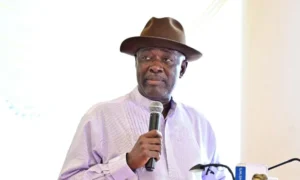
Abdulmalik Halilu, NCDMB Director of Corporate Services, highlighted the impact of these interventions at a media stakeholders’ workshop in Abuja, noting that local participation in the oil and gas sector has risen from 44% three years ago to 61% this year. He cited the NLNG Train-7 project as an example, which employed around 8,000 Nigerians and engaged 1,400 local vendors alongside 500 expatriates.
“Local content is about domestication based on global best practices. It’s not just about indigenisation or supplying inferior goods,” Halilu said, emphasizing that the Board focuses on both capacity building and enforcement under the Nigerian Oil and Gas Industry Content Development Act.
Halilu added that local content initiatives contribute to industrialization, job creation, research development, environmental responsibility, and profitable ownership of critical assets. The policy dates back to 2001 under President Olusegun Obasanjo and was reinforced by the 2010 Nigerian Oil and Gas Industry Content Act under President Goodluck Jonathan.
He further explained that all interventions follow a structured framework with clear performance indicators. Key achievements include local fabrication of pressure vessels, certified pumps, boots, and cables, with capacities now supporting other sectors like power and construction.
Looking beyond Nigeria, Halilu stated that the NCDMB is promoting local content development across Africa, noting that a continental approach is necessary to attract large-scale investments. Initiatives like the Africa Energy Bank and the Brazzaville Accord on local content have emerged from Nigeria’s leadership in the field.
Obinna Ezeobi, NCDMB General Manager of Corporate Communications, assured that the Board will continue supporting journalists through capacity-building programs to improve reporting on the oil and gas industry.