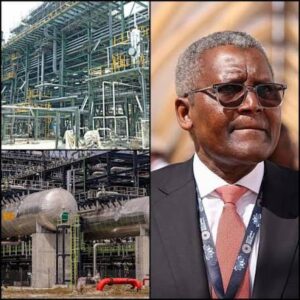
Nigeria’s crude oil output has received a fresh lift after new production streams, Utapate and Cawthorne, jointly contributed more than 12 million barrels between January and May 2026, according to industry data from the Nigerian Upstream Petroleum Regulatory Commission.
The figures show that the two relatively new crude grades are gradually strengthening the country’s export capacity and supporting revenue growth, even though production targets have not yet been fully met.
The Utapate crude grade, developed in 2024 and operated within Oil Mining Lease 13 in Akwa Ibom State, recorded about 8.75 million barrels within the five-month period. Despite steady monthly gains, the field is still operating below its official production target of 80,000 barrels per day. Output hovered between roughly 55,000 and 59,000 barrels daily from January to May, showing consistent growth but still leaving a daily shortfall of more than 20,000 barrels compared to expectations.
The project is managed through a partnership involving NNPC Ltd and Sterling Oil Exploration and Energy Production Company Limited via NNPC E&P Limited. Officials had previously projected that the field would scale up to 80,000 barrels per day by the end of 2025, driven by expansion work and improved infrastructure.
The newer Cawthorne crude blend also contributed significantly, adding about 3.41 million barrels during the same period. Production for the grade increased steadily from just over 12,000 barrels per day in January to nearly 31,000 barrels per day in April before slightly easing in May. The crude, which is exported from facilities linked to Oil Mining Lease 18, has already begun reaching international markets, with early shipments sent to Europe as part of Nigeria’s expanding export portfolio.
Together, both crude streams produced approximately 12.16 million barrels, reflecting Nigeria’s ongoing efforts to diversify its crude mix and stabilise long-term output. The developments come at a time when Nigeria is trying to improve reliability across its oil sector, particularly by reducing disruptions and boosting efficiency in production hubs.
Beyond the new crude grades, Nigeria’s total oil production also climbed above its Organisation of the Petroleum Exporting Countries (OPEC) allocation in May 2026. Daily crude output averaged about 1.53 million barrels, and when condensates are included, total production reached around 1.7 million barrels per day. This places the country slightly above its assigned OPEC production quota.
Energy authorities say improved operational stability and fewer disruptions across major oil facilities contributed to the stronger performance, reinforcing Nigeria’s position as one of Africa’s leading oil producers.