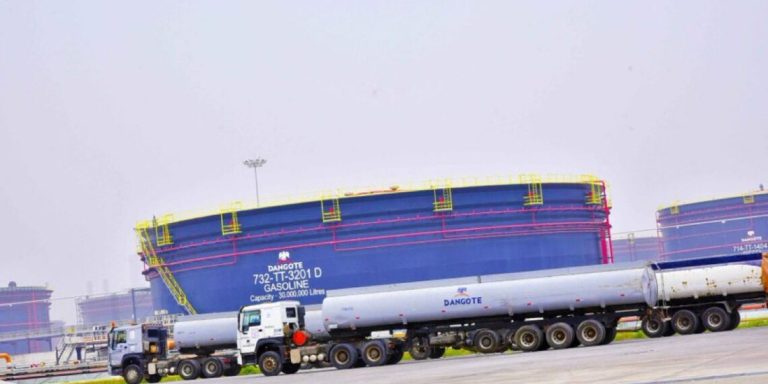
Nigerian petroleum marketers are increasingly bringing refined products from the Dangote Petroleum Refinery back into the country through the offshore trading hub in Lomé, Togo, according to insights from S&P Global Energy.
Speaking during a webinar organised by the Major Energies Marketers Association of Nigeria (MEMAN), S&P Global Energy analyst Matthew Tracey-Cook said a significant portion of fuel imported into Nigeria by sea now originates from the Dangote refinery, despite the facility’s growing local supply capacity.
He explained that Dangote-produced fuel is often exported to the ship-to-ship (STS) trading hub in Lomé before being transported back to Nigeria, creating a circular trade pattern driven by market and pricing dynamics.
According to data presented during the webinar, Dangote-origin products accounted for a substantial share of Nigeria’s waterborne fuel imports in recent months. Between March and May 2026, more than 70 per cent of imported petroleum products arriving in Nigeria by sea reportedly came from the refinery’s coastal export volumes.
Tracey-Cook noted that a similar trend has emerged in the diesel market, with Dangote’s influence on regional fuel flows becoming increasingly visible.
Despite the refinery’s expanding direct supply to Nigeria, the analyst said the Lomé hub remains a critical part of West Africa’s fuel distribution network. He explained that the facility allows larger vessels to offload cargo that can then be transferred to smaller ships capable of accessing ports across the region.
He added that many West African ports lack the infrastructure needed to receive fully loaded medium-range tankers, making Lomé an important transshipment centre for meeting regional fuel demand.
Data presented at the event showed that Dangote exports significant volumes of petrol, diesel, aviation fuel and other refined products to the offshore hub, where cargoes from multiple sources are consolidated and redistributed.
Tracey-Cook also highlighted unusual pricing developments in the region, noting that gasoline prices in West Africa have recently traded above European levels, a trend he described as uncommon for the season.
According to him, petrol prices at the Dangote refinery closely track benchmarks established at the Lomé trading hub, enabling market participants to manage pricing risks more effectively.
He described the Dangote refinery and the Lomé STS market as the two most influential supply centres in West Africa, comparing their growing importance to established fuel trading hubs in the Mediterranean region.
The analyst further said geopolitical tensions in the Middle East have strengthened Dangote’s role in international fuel markets. He noted that disruptions to supplies from the Persian Gulf created opportunities for alternative exporters, including the Nigerian refinery.
As a result, Dangote significantly increased shipments of aviation fuel and other refined products to overseas markets. In May 2026, the refinery reportedly emerged as the world’s largest exporter of jet fuel by refined product volume.
Recent export records also showed increased deliveries from the refinery to destinations including the United Kingdom, the Netherlands and South Africa.
The development comes months after some Nigerian fuel marketers alleged that Dangote sold petrol to international traders at lower prices than those offered domestically. The claims prompted debate within the industry, with some marketers arguing that purchasing products through foreign traders occasionally proved cheaper than buying directly from the refinery.
Dangote Refinery, however, denied the allegations, maintaining that it does not offer preferential pricing to buyers outside Nigeria.