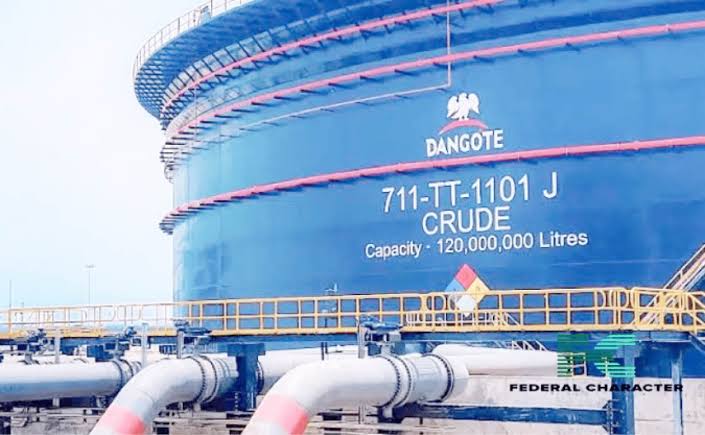
The expansion of the Dangote Petroleum Refinery is significantly changing fuel supply patterns across West Africa, leading to a sharp reduction in the region’s dependence on imported refined petroleum products.
Recent industry data shows that imports of clean petroleum products into West Africa fell considerably in May as the Nigerian refinery increased production and met a larger share of regional demand. The decline reflects the growing influence of the refinery, which has become a major supplier of fuel within Nigeria and neighbouring countries.
According to market intelligence reports, the reduction in imports has also affected international shipping activity. Tanker movements into West African ports have dropped as fewer fuel cargoes are being transported from traditional suppliers in Europe and other regions.
Shipping analysts noted that larger product tankers recorded the steepest declines in activity, while medium-range vessels experienced only a modest decrease due to changing trade routes. Increased fuel shipments from the Americas helped offset part of the overall decline in tanker demand.
For years, Nigeria relied heavily on imported fuel, making routes such as Rotterdam-to-Lagos among the busiest for petroleum cargoes. However, the rise of local refining capacity has weakened the need for such long-distance imports.
The Dangote refinery, which reached its full processing capacity of 650,000 barrels per day earlier this year, now supplies most of Nigeria’s fuel requirements. Government figures indicate that the facility accounted for about 80 percent of the country’s petrol demand in April.
Industry experts say the refinery is gradually transforming Nigeria from a major fuel importer into a regional export hub. Refined petroleum products are increasingly being shipped from Lagos to countries including Ghana, Togo and Côte d’Ivoire, while exports have also reached markets in Europe, Asia and North America.
The shift is also affecting storage and distribution centres that previously benefited from supplying fuel to Nigeria. Analysts suggest some of these hubs may struggle to regain their former importance as regional buyers increasingly source products directly from the Nigerian refinery.
Observers describe the development as a major change in Atlantic fuel trade, with shorter regional deliveries replacing many of the long-haul import routes that once dominated the market.
The refinery’s growing export activity has gained further momentum amid recent disruptions in global energy markets. Industry data shows that exports of refined products from the facility reached record levels in April, reinforcing its position as one of Africa’s most influential energy assets.