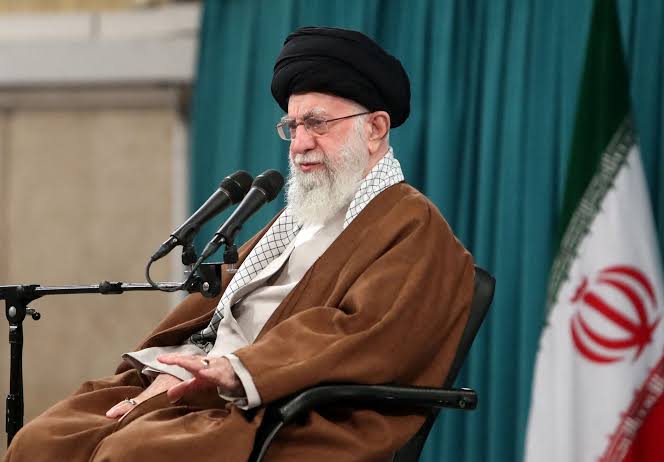
Iran’s Supreme Leader, Mojtaba Khamenei, has approved a peace agreement with the United States aimed at ending recent hostilities in the Middle East, though he admitted he had concerns about the terms of the deal.
In a written statement released on Thursday, Khamenei said he accepted the agreement after receiving assurances from Iranian officials that the country’s interests would be protected. He added that his approval does not mean Iran is fully aligned with Washington’s positions, stressing that future negotiations should not be seen as surrendering national viewpoints.
The deal was signed by U.S. President Donald Trump and Iranian President Masoud Pezeshkian. It sets a 60-day window for wider talks covering major disputes, including Iran’s nuclear programme and broader regional tensions.
The agreement follows weeks of conflict between Iran, the United States, and Israel, which escalated before a ceasefire was reached earlier in the year. The latest deal is expected to ease tensions and open the door for further diplomatic engagement.
As part of the arrangement, the United States has lifted a naval blockade that previously restricted Iranian shipping routes. This has allowed limited movement of commercial vessels through the strategic Strait of Hormuz, a key global energy corridor.
Iran has also introduced new procedures requiring ships passing through the waterway to seek approval from a designated authority, although transit fees will be waived for the first 60 days.
Oil prices fell following news of the agreement, as fears over supply disruptions eased. However, uncertainty remains over whether both sides will move forward with planned technical talks scheduled to take place in Switzerland.
U.S. Vice President JD Vance said discussions with Iranian officials could begin soon, although the schedule is not yet final.
Reactions to the deal have been mixed in both countries. Some officials see it as a breakthrough in relations, while others doubt it will lead to lasting peace. Concerns remain that tensions could return once the initial negotiation period ends.
The agreement also includes a U.S. commitment to lift oil sanctions on Iran immediately. A proposed $300 billion reconstruction fund, backed by regional partners, is expected to be activated if a final nuclear agreement is reached.
While the deal marks a major diplomatic step, leaders on both sides have acknowledged that significant challenges remain before a lasting resolution can be achieved.