The Federal Government has said Nigeria could cut fuel-related expenses by an estimated $121 billion if the country successfully transitions to a power generation system dominated by renewable energy sources.
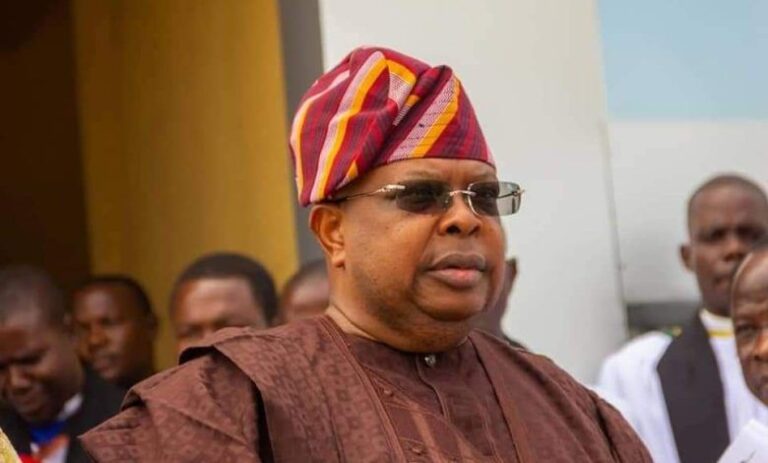
Minister of Power Joseph Tegbe disclosed this during the 2026 Renewable Energy Outlook Conference organised by the Lagos Chamber of Commerce and Industry in Lagos. He described the country’s energy transition agenda as an economic opportunity capable of delivering significant benefits to businesses, households and government finances.
According to the minister, Nigeria’s Energy Transition Plan projects major long-term savings if renewable energy accounts for 90 per cent of the country’s electricity mix. While achieving the target will require substantial investment, he noted that the expected economic returns outweigh the costs.
Tegbe explained that the plan envisages an additional annual investment of about $10 billion above current spending levels to support the expansion of clean energy infrastructure across the country.
He said the transition roadmap targets an installed power generation capacity of 277 gigawatts by 2060, with solar energy expected to play the leading role. The minister noted that Nigeria’s strong solar resources, growing investor interest and supportive policies have positioned the country among Africa’s leading solar energy markets.
Despite the push toward renewable energy, Tegbe stressed that natural gas will remain important in maintaining electricity supply during the transition period. He said Nigeria’s vast gas reserves would help provide stable power generation while renewable energy projects continue to expand.
The minister also encouraged manufacturers and other large energy consumers to embrace emerging power solutions enabled by the Electricity Act 2023. These include industrial mini-grids, embedded generation projects, renewable energy purchase agreements and direct power connections from independent producers.
Tegbe added that reforms introduced by President Bola Tinubu’s administration have helped attract more than $2 billion in private investment into the power sector. He also revealed that sector revenues increased from roughly N850 billion in 2023 to over N1.5 trillion by 2025.
He called on the private sector to play a more active role in shaping state electricity markets and supporting regulatory frameworks that encourage investment and improve power delivery.
Also speaking at the conference, the Managing Director of the Rural Electrification Agency, Abba Aliyu, said renewable energy should be viewed as a tool for industrial development rather than being limited to rural electrification efforts.
Aliyu noted that rising demand from data centres, artificial intelligence applications, electric vehicles and advanced manufacturing is making reliable electricity increasingly important for economic competitiveness.
He argued that renewable energy systems such as mini-grids and solar-plus-storage projects can support productive sectors by powering industries, commercial centres, technology hubs and agricultural processing facilities.
According to him, reducing dependence on diesel generators would lower production costs for businesses, improve competitiveness and stimulate economic growth.
Aliyu further highlighted recent policy reforms, including the Electricity Act 2023 and the Nigerian Electricity Regulatory Commission’s Mini-Grid Regulations 2026, saying they have created new opportunities for private investment in distributed energy projects.
Participants at the conference called for stronger collaboration between government agencies and private investors to accelerate renewable energy deployment, improve electricity reliability and support Nigeria’s long-term economic development goals.