The Nigerian National Petroleum Company Limited (NNPC Ltd.) says it has achieved $3.4 billion in operating cost savings over the past year through a broad contract optimisation and restructuring programme, while also recording higher crude oil and gas production.
The company’s Group Chief Executive Officer, Bashir Bayo Ojulari, announced the performance during the opening of the 25th NOG Energy Week in Abuja, where he presented NNPC’s one-year operational scorecard.
According to Ojulari, the cost reductions were driven by efforts to improve efficiency, eliminate waste and strengthen commercial discipline without disrupting operations. He said the initiative reflects the company’s focus on delivering greater value to both the government and investors.
The scorecard showed that crude oil production rose by six per cent year-on-year to 569.7 million barrels, while gas production increased by 8.1 per cent to 2,576 billion standard cubic feet. Government revenue generated from the company’s activities also climbed by 21.8 per cent to N19.5 trillion during the review period.
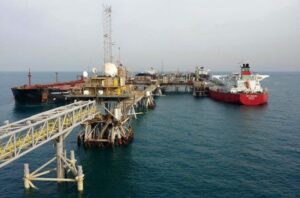
Ojulari disclosed that Nigeria’s daily crude oil production has reached about 1.71 million barrels, its highest level in five years, while NNPC Exploration and Production Limited recorded a peak output of 365,000 barrels per day.
He said the company aims to increase national crude production to two million barrels per day by 2027 and three million barrels per day by 2030. Gas production is also projected to rise to 10 billion standard cubic feet per day by 2027 and 12 billion cubic feet per day by the end of the decade.
The NNPC chief attributed the improved output to better operational stability, enhanced infrastructure and stronger security around oil-producing assets and export facilities.
He added that major crude evacuation pipelines, including the Trans Niger, Trans Escravos, Trans Ramos, Trans Forcados and Oando-Brass pipelines, are now operating at full availability, while crude export terminals have achieved an average recovery rate of 98 per cent over the past year.
On joint venture operations, Ojulari said NNPC maintained full compliance with its cash-call obligations throughout 2025 and into mid-2026. However, he noted that some partners had yet to fully meet their funding commitments, requiring the national oil company to provide additional financial support in certain projects.
He also revealed that NNPC signed new long-term gas supply agreements covering 1.29 billion standard cubic feet per day for liquefied natural gas projects and another 750 million standard cubic feet per day for domestic industrial consumers, including Dangote Refinery and DFL FZE. The agreements are expected to attract more than $20 billion in investments, with several additional commercial deals currently under negotiation.
Ojulari said the company has also resumed monthly remittances to the Federation Account, reinstated regular business performance reporting and introduced its first earnings call as part of measures to improve transparency and strengthen investor confidence.
Looking beyond Nigeria, he urged African governments, investors and energy stakeholders to build stronger partnerships to unlock the continent’s energy potential, arguing that collaboration will be key to attracting investment and developing competitive industrial value chains.