The Federal Government has unveiled plans to establish Renewable Energy Service Companies (RESCOs) that will compete with electricity distribution companies (DisCos) by delivering electricity through large-scale renewable energy systems.
The initiative, spearheaded by the Rural Electrification Agency (REA), is expected to improve electricity access in underserved communities through interconnected solar-powered mini-grids that can operate independently of the national grid.
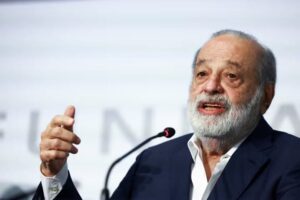
Speaking at the Oriental News 2026 Conference in Lagos, the Managing Director of the REA, Abba Aliyu, represented by the agency’s Executive Director of Corporate Services, Gboyega Ayoade, said the agency is shifting from supporting isolated mini-grid projects to encouraging developers to build utility-scale renewable energy networks capable of serving entire communities.
Aliyu said the proposed RESCOs would provide consumers with an alternative source of electricity by operating multiple interconnected mini-grids powered by solar energy and battery storage, offering reliable power supply around the clock.
He explained that the new approach would allow developers to establish dozens of mini-grids across a community instead of a single installation, giving consumers the option of choosing renewable energy providers over conventional electricity distributors.
According to him, the initiative is necessary because many communities remain without reliable electricity as some DisCos have been unable or unwilling to extend services to areas where returns are considered commercially unattractive.
Aliyu disclosed that agreements are already being reached between mini-grid developers and DisCos in locations where grid supply is weak or unavailable. He added that RESCOs would also be allowed to construct their own electricity infrastructure, subject to approval and licensing by the Nigerian Electricity Regulatory Commission (NERC).
He stressed that achieving reliable electricity supply would require the adoption of cost-reflective tariffs, arguing that the government can no longer sustain electricity subsidies indefinitely. He cited the improved power supply experienced by many Band A customers as evidence that higher tariffs can support better service delivery.
On renewable energy safety, Aliyu said the REA subjects solar panels and battery systems used in its projects to strict quality checks, while the Standards Organisation of Nigeria is screening imported solar equipment to ensure compliance with national standards.
He added that the agency is also developing systems for the safe recycling and disposal of lithium batteries to minimise environmental and safety risks as renewable energy deployment expands across the country.