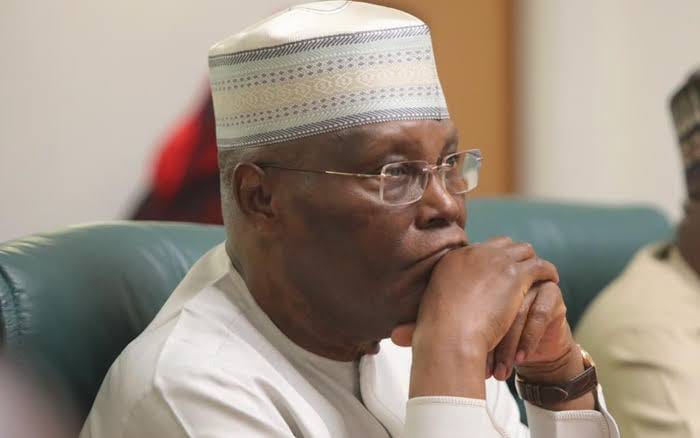
Former Vice President Atiku Abubakar has called on President Bola Tinubu’s administration to account for what he described as an estimated N7.98 trillion in additional oil revenue generated from higher international crude prices, while questioning the government’s continued reliance on domestic borrowing.
In a statement issued by his Senior Special Assistant on Public Communication, Phrank Shaibu, Atiku argued that the Federal Government’s borrowing profile is inconsistent with the strong earnings expected from elevated crude oil prices.
According to him, the Federal Government raised about N5 trillion from the domestic bond market in the first half of 2026, significantly higher than the amount borrowed during the same period last year. He said such aggressive borrowing would only be justified if government revenues had declined, which he claimed was not the case.
Atiku noted that the 2026 budget was based on a crude oil benchmark of $64.84 per barrel, while Brent crude averaged about $92 per barrel between March 1 and July 14. He added that Nigerian crude typically trades above Brent, suggesting the country earned more than projected in the budget.
Based on an average production of 1.5 million barrels per day, Atiku estimated that the difference between the benchmark and market prices translated into about $5.76 billion, or roughly N7.98 trillion, in additional revenue over the 135-day period.
He questioned why the government was still borrowing heavily despite the alleged windfall and called for full disclosure of the excess oil earnings. He also urged the administration to explain how the funds had been utilized.
The former vice president said previous administrations maintained clearer mechanisms for managing excess crude earnings through fiscal buffers, adding that Nigerians deserve greater transparency in the management of public finances.
Atiku further argued that despite higher oil prices and the removal of fuel subsidies, many Nigerians continue to face economic hardship, while infrastructure and other public services have shown little improvement.
He pledged that an African Democratic Congress (ADC) administration under his leadership would adopt a rules-based fiscal framework to ensure that oil revenues above budget projections are transparently managed. According to him, such funds would be used to reduce public debt, strengthen fiscal reserves, and finance investments in infrastructure, healthcare, education, agriculture, and other productive sectors.
He also promised regular public reporting on excess crude earnings, lower government spending, reduced waste, and borrowing only for projects capable of delivering measurable economic benefits.