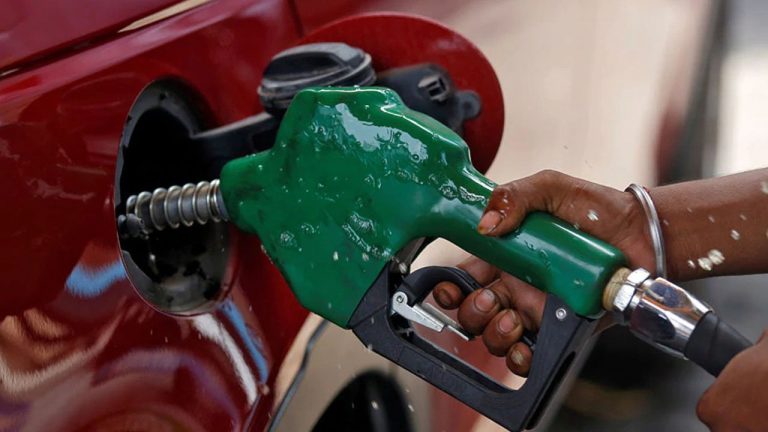
The Federal Government has announced that petrol supplied across Nigeria now meets a maximum sulphur content of 50 parts per million (ppm), marking a significant step in the country’s transition to cleaner fuel standards.
The disclosure was made by the Nigerian Midstream and Downstream Petroleum Regulatory Authority (NMDPRA) during a media briefing in Abuja ahead of the Second West Africa Refined Fuel Conference scheduled for August 11 and 12.
Speaking at the briefing, the Chief Executive of the NMDPRA, Rabiu Umar, said Nigeria had aligned its fuel quality specifications with cleaner standards being adopted across the region, adding that petroleum products with sulphur levels above 50ppm would no longer be accepted into the country’s market.
He explained that the move follows ongoing collaboration among West African regulators and industry stakeholders to harmonise fuel specifications, making it easier for refined petroleum products to move freely across the region without technical restrictions.
According to Umar, locally refined and imported petrol now complies with the approved sulphur limit, positioning Nigeria to strengthen its role in supplying cleaner fuels to neighbouring countries as refining capacity continues to expand.
He noted that the improved fuel specification represents a major departure from previous years when Nigeria faced criticism over the importation of high-sulphur fuels linked to environmental pollution and public health concerns.
The regulator also highlighted the contribution of the Dangote Petroleum Refinery to improving domestic fuel supply while supporting exports to other West African markets.
Beyond fuel quality, Umar stressed that increased investment in pipelines, storage facilities, marine terminals, rail networks and other critical infrastructure would be necessary to improve petroleum distribution and deepen regional trade.
He said the forthcoming West Africa Refined Fuel Conference aims to promote a transparent and competitive regional petroleum market by encouraging infrastructure financing, regulatory cooperation and stronger cross-border collaboration.
The NMDPRA further reiterated the need for Africa to develop its own petroleum pricing benchmark, arguing that the continent should gradually reduce its reliance on foreign price indices as refining activities continue to grow.
According to the Authority, the conference is expected to attract regulators, investors, financial institutions and industry operators to discuss investment opportunities and policy measures that will strengthen West Africa’s downstream petroleum sector and improve regional energy security.