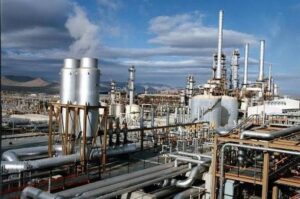
The Federal Government has said Nigeria needs more investments in refining and petroleum infrastructure because the Dangote Petroleum Refinery alone cannot satisfy the growing demand for refined products across Africa.
Minister of State for Petroleum Resources (Oil), Heineken Lokpobiri, made this known on Tuesday in Abuja at the second West Africa Refined Fuel Market Conference.
Lokpobiri said the expansion of the Dangote refinery, including its planned increase to 1.4 million barrels per day, would significantly strengthen Nigeria’s refining capacity but would still fall short of the requirements of the African market.
According to him, Nigeria must use the success of the refinery as a catalyst for further private-sector investment in the upstream, midstream and downstream segments of the petroleum industry.
He said Nigeria was well positioned to become a major supplier of refined petroleum products to the continent because of its large domestic market and strategic location.
The minister urged investors to put more capital into refineries, storage facilities, transportation networks and other infrastructure needed to support a competitive petroleum market.
Lokpobiri also stressed the importance of establishing a sustainable pricing framework that would encourage investment while allowing market forces to influence petroleum product prices.
He said Nigeria should move away from its longstanding dependence on exporting raw commodities and importing processed products, arguing that increased domestic refining could help the country retain more value within its economy.
The minister noted that demand from European countries for products such as aviation fuel from the Dangote refinery had demonstrated the strength of Nigeria’s refining market and the need to expand domestic capacity.
He said the government was committed to supporting the development of a regional petroleum market that would enable Nigeria to serve markets beyond West Africa.
Special Adviser to the President on Energy, Olu Verheijen, said the challenge facing West Africa was not a shortage of energy resources or demand but weak infrastructure and fragmented markets.
Verheijen noted that increasing refining capacity alone would not guarantee energy security, stressing the need for efficient systems to finance, store, transport and distribute petroleum products.
She called for greater investment in pipelines, ports, storage terminals, coastal shipping, trucking infrastructure and trading platforms, alongside common product standards and closer cooperation among regulators.
Meanwhile, the Chief Executive of the Nigerian Upstream Petroleum Regulatory Commission, Oritsemeyiwa Eyesan, said rising crude production, improved gas supply and expanding refining capacity had created an opportunity to integrate West Africa’s petroleum market.
Eyesan urged countries in the region to abandon isolated national approaches and develop interconnected regulatory and infrastructure systems.
She said a more integrated market would allow producers, refiners, traders and consumers across West Africa to operate more efficiently and improve the region’s energy security.
The conference was organised by the Nigerian Midstream and Downstream Petroleum Regulatory Authority, S&P Global Commodity Insights and the West Africa Regulators Forum, with discussions focused on financing infrastructure and developing a transparent regional benchmark for refined petroleum products.