Indigenous oil and gas companies now account for more than half of Nigeria’s crude oil production, the Federal Government has said.
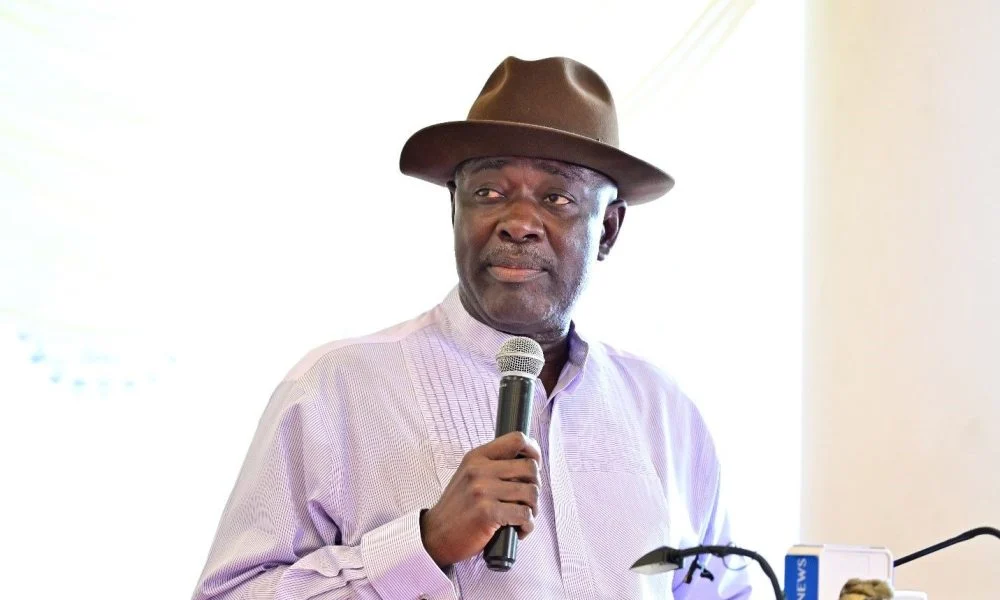
The Minister of State for Petroleum Resources (Oil), Senator Heineken Lokpobiri, disclosed this at the maiden PTDF Journal Summit 2026 in Abuja, where he was represented by his Technical Adviser, Engr. Emmanuel Sinime.
Lokpobiri attributed the development to the divestment of assets by international oil companies (IOCs), which he said had created opportunities for Nigerian operators to increase their participation in the upstream sector.
He said Nigeria’s crude oil production had increased from about one million barrels per day in 2023 to more than 1.7 million barrels per day, while the number of active drilling rigs rose from about 14 to over 60.
According to him, Nigeria has also attracted more than $10 billion in foreign direct investment in recent years, reflecting increased activity in the oil and gas sector.
The minister described the growing contribution of indigenous operators as a major development for the Nigerian petroleum industry, following the transfer of some assets previously operated by international oil companies.
He, however, said higher crude production would require corresponding investments in transportation, storage, refining and other infrastructure to ensure that increased output translates into broader economic benefits.
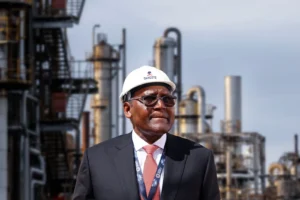
Lokpobiri pointed to the Dangote Petroleum Refinery and modular refineries operated by companies such as Waltersmith and Aradel as examples of private-sector investments helping to expand Nigeria’s refining capacity.
On the gas sector, the Minister of State for Petroleum Resources (Gas), Ekperikpe Ekpo, said private investment, technical expertise and innovation would be essential to unlocking the country’s gas resources.
Ekpo said the Federal Government was working to create an environment that would encourage private investment, noting that the Petroleum Industry Act provides a framework for regulatory certainty and institutional governance.
He said the Decade of Gas initiative was aimed at transforming Nigeria into a gas-powered industrial economy, with gas expected to support industrialisation, job creation, energy security and economic diversification.
According to him, achieving this goal would require investment in gas processing, transportation and distribution infrastructure, as well as liquefied petroleum gas, compressed natural gas, petrochemicals and other gas-based industries.
He noted that the government could not finance the development of the sector alone and called for greater participation from private investors, financial institutions, technology providers and other stakeholders.
Ekpo identified infrastructure gaps, high financing costs, project risks, regulatory bottlenecks and unreliable energy infrastructure as some of the challenges that must be addressed. He also called for more investment in indigenous technology, local manufacturing and skills development.
The Executive Secretary of the Petroleum Technology Development Fund, Prof. Shuaibu Aliyu, said the summit was designed to expand the PTDF Journal beyond academic research to promote dialogue, collaboration and practical solutions to challenges in the petroleum industry.
Aliyu said increased private investment in refining, gas processing, logistics, storage and distribution could support economic growth, create jobs and strengthen local technical capacity.
He added that PTDF wanted research findings to be translated into practical applications, including the development and commercialisation of intellectual property, while stronger partnerships between researchers and industry would help address financing, infrastructure, regulation, technology and market challenges.
Managing Director of Waltersmith Petroman Oil, Oladapo Filani, said Nigeria’s challenge was no longer only about producing skilled professionals but also ensuring that they could find opportunities to apply their expertise within the country.
Filani said the industry continued to face infrastructure deficits, human capital and technical gaps, financing difficulties, commercial viability concerns and investment uncertainty.
He also identified inadequate gas gathering and processing facilities, limited pipeline infrastructure, storage and terminal capacity, and weaknesses in product logistics as areas requiring further investment.
According to him, issues such as pipeline vandalism, crude oil theft and infrastructure integrity also remain challenges to the sector.
He noted that infrastructure projects involving the Federal Government and NNPC Limited, including the Ajaokuta-Kaduna-Kano, Oben-Oben and OB3 pipelines, would be important to improving the movement and utilisation of energy resources across the country.