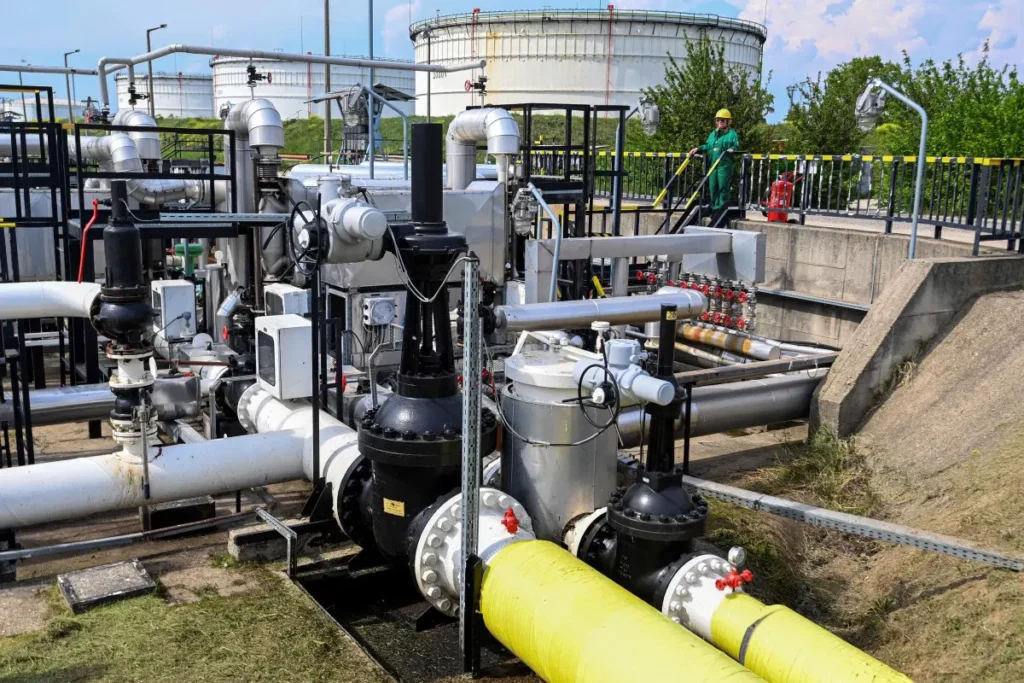
China has directed its major oil and gas companies to increase domestic production and investment as disruptions to Iranian crude supplies heighten concerns over the country’s dependence on imported energy.
The National Energy Administration issued the directive after a meeting on October 21, urging state-owned producers, including PetroChina, Sinopec and CNOOC, to expand production capacity, accelerate exploration and develop strategic oil and gas supply bases.
The move comes as the Iran war disrupts crude shipments from the Middle East, raises transportation costs and limits China’s access to discounted Iranian oil.
According to Oilprice.com, China has increasingly relied on its crude reserves to cushion the impact of rising international prices, reducing the need to purchase expensive supplies from the global market.
However, the country’s stockpiles have declined by 162 million barrels since reaching a record level in early May, highlighting the limits of relying on stored crude to meet domestic demand.
Data cited in the report showed that China’s onshore crude inventories stood at approximately 1.192 billion barrels in the week ending October 19.
In September, Chinese refineries processed about 13.99 million barrels per day (bpd), while domestic production accounted for 4.43 million bpd and imports supplied another 9.03 million bpd. The remaining 530,000 bpd was estimated to have come from inventory withdrawals.
China’s efforts to secure additional supplies have also been affected by the reported depletion of Iranian crude stored offshore for delivery to Chinese buyers.
Energy analytics firm Kpler estimated that Iran’s floating crude inventories available for delivery to China fell below one million barrels by October 5 before being exhausted.
Iranian oil has been an important source of discounted crude for Chinese independent refiners, helping them manage costs despite US sanctions. The disruption has forced buyers to consider alternative supplies from other Middle Eastern countries, Africa and other producing regions, potentially at higher prices.
China is also seeking stronger energy cooperation with Russia. On October 21, both countries agreed to support companies interested in expanding oil cooperation, although the announcement did not include specific new supply commitments.
Meanwhile, Beijing is looking to increase domestic output to reduce its exposure to international supply disruptions.
China produced a record 216 million metric tonnes of crude oil in 2025, while natural gas production exceeded 260 billion cubic metres. Despite these gains, the country remains heavily dependent on foreign oil, with September crude imports exceeding twice its domestic production.
The government is encouraging exploration in deepwater areas, deep underground formations and unconventional oil resources, alongside efforts to increase output from existing fields. However, developing these resources requires substantial investment, specialised equipment and time.
The country is also seeking to raise domestic natural gas production as disruptions to liquefied natural gas shipments from the Persian Gulf expose vulnerabilities in its gas supply chain.
Oil import forecasts have also been revised downward amid renewed price increases. Energy consultancies FGE NexantECA and Energy Aspects have lowered their estimates for China’s crude imports in the fourth quarter to between 9.2 million and 9.3 million bpd.
Although China may increase purchases when prices ease and draw on reserves when costs rise, higher domestic production and diversified supply sources are expected to remain central to its energy security strategy.