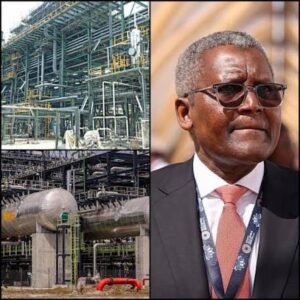
Nigeria’s petrol imports fell by 26 per cent in August as the Dangote Petroleum Refinery increased its daily supply to the domestic market, according to data from the Nigerian Midstream and Downstream Petroleum Regulatory Authority (NMDPRA).
The regulator’s latest factsheet showed that average daily petrol imports dropped to 14.6 million litres in August from 19.7 million litres in July.
In contrast, the Dangote refinery raised its average daily petrol supply by 39 per cent to 35.9 million litres from 25.8 million litres recorded in the previous month.
The refinery also exported an average of 9.73 million litres of petrol daily during the period, indicating that its operations served both local and international markets.
The increase in refining activity coincided with a 17 per cent rise in crude oil supplied to Nigerian refineries, which averaged 683,000 barrels per day in August.
Despite the increase in domestic petrol supply, average daily consumption declined to 41.6 million litres from 48.3 million litres in July.
The figures suggest a shift in Nigeria’s petroleum supply pattern, with higher output from the Dangote refinery coinciding with lower import volumes and reduced domestic consumption.
However, the country’s three government-owned refineries in Port Harcourt, Warri and Kaduna remained non-operational throughout August. The facilities, managed by the Nigerian National Petroleum Company Limited (NNPC), have struggled with prolonged operational challenges.
Four modular refineries operated during the month, but their production was limited to diesel.
The NMDPRA report also showed that Nigeria supplied an average of 14.5 million litres of diesel daily to the domestic market in August. Local refineries accounted for 13.2 million litres, while imports contributed 1.3 million litres.
For liquefied petroleum gas (LPG), commonly known as cooking gas, average daily supply stood at 4.3 million units. Domestic production accounted for three million units, while imports supplied the remaining 1.3 million units.
Meanwhile, disagreements between the Dangote refinery and petroleum marketers over petrol imports continue to affect the downstream sector. The refinery recently stopped selling petrol to marketers who still import refined petroleum products.
Oil and gas expert, Dr Ayodele Oni, described the dispute as a sign of the changing dynamics of Nigeria’s refining industry, arguing that domestic refining had reached a stage where producers could demand greater control over how their products were marketed.
He noted that discussions about the industry had shifted from whether Nigeria could refine petroleum products locally to how domestic producers could maintain product standards and protect their market interests.
Oni, however, stressed the importance of ensuring that any standards introduced by local refiners were transparent, objective and fair to all industry participants.
The latest figures highlight the growing contribution of domestic refining to Nigeria’s petroleum supply, although continued imports and the shutdown of the country’s state-owned refineries remain challenges for the industry.