Nigeria has renewed its commitment to ending routine gas flaring by 2030, but weak enforcement of regulations and gaps in methane monitoring continue to raise concerns about achieving the target.
The Nigerian Upstream Petroleum Regulatory Commission (NUPRC) Chief Executive, Oritsemeyiwa Eyesan, said the commission was strengthening penalties for gas flaring and encouraging the commercial use of gas currently burned during oil production.
Eyesan, represented by the commission’s Deputy Director of Gas Utilisation, Janice Anyanwu, spoke on Wednesday at the Emogas International Natural Gas-Based Industry Conference and Exhibition 2026 in Abuja.
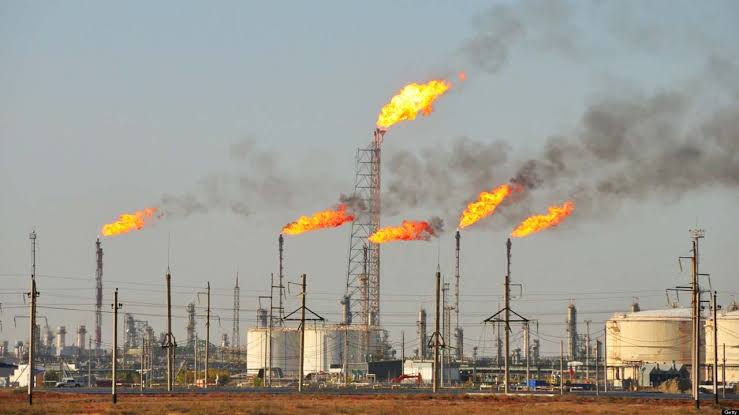
She said gas flaring had fallen from about 90 per cent of production to approximately seven per cent, although Nigeria still flares around 500 million standard cubic feet of gas daily.
However, an investigation by PREMIUM TIMES found gaps in the implementation of the Petroleum Industry Act (PIA) and regulations designed to control gas flaring, venting and methane emissions.
The report identified regulatory delays, weak enforcement and shortcomings in emissions measurement. It also found that the commission had not published some information required under its regulations, including comprehensive data on gas venting.
In an April 2026 directive, the NUPRC acknowledged limitations in its capacity to measure, report and verify methane emissions. It subsequently directed oil and gas operators to improve their reporting and adopt more accurate, measurement-based monitoring systems.
Concerns have also emerged over claims by oil companies that they have stopped routine gas flaring. PREMIUM TIMES reported observing continued flaring at TotalEnergies-operated facilities around OML 58 and OML 130, including locations near Obite and Obagi communities in Rivers State.
Satellite data reviewed by the newspaper also indicated that flare activity at the assets had not disappeared or declined significantly after the company’s announcement.
The findings raised questions about how regulators independently verify companies’ claims and distinguish routine flaring from other activities, such as emergency and safety-related flaring.
To reduce gas waste, the NUPRC launched the Nigerian Gas Flare Commercialisation Programme in 2021 and auctioned 42 flare sites to investors. Proposed projects include mini liquefied natural gas plants and facilities for producing liquefied petroleum gas.
Under the PIA, Eyesan said the gas-flaring penalty had been standardised at $2 per thousand standard cubic feet, with additional penalties for operators that exceed approved limits.
Despite these measures, investigations have documented continued flaring at some oil facilities and concerns about compliance with reporting requirements.
In December 2025, the commission issued flare-gas commercialisation permits to 28 companies. It later threatened to revoke permits from investors that failed to demonstrate significant progress in using the gas.
Nigeria’s gas resources offer opportunities for increased investment. Eyesan said the country had proven gas reserves of 215.19 trillion cubic feet as of January 1, representing an estimated reserve life of 85 years.
She added that Nigeria produced an average of 7.42 billion standard cubic feet of gas daily in 2025, with about 92.4 per cent utilised.
The commission is also promoting investment through reforms, including Executive Order 40 of 2024, and projects such as Ubeta, HI and Ima, which have a combined prospective production capacity of about one billion standard cubic feet daily.
It is also advancing a gas-swap framework and offering 40 blocks in a licensing round to attract further investment.
Despite the country’s substantial reserves, inadequate infrastructure, high development costs and insufficient gas volumes at some flare sites remain obstacles to ending routine flaring.
Managing Director of Oando Energy Resources Nigeria Ltd., Ainojie Irune, said Africa needed to focus on developing its gas resources and delivering reliable supplies rather than simply celebrating its reserves.
Speaking at the conference, Irune estimated that Africa’s gas industry would require about $1 trillion in investment by 2050.
He said Nigeria’s gas development was constrained by inadequate infrastructure, uncertain payment arrangements and delays in commercial decisions. He added that more than 55 trillion cubic feet of discovered Nigerian gas remained undeveloped or had yet to be commercialised.
Irune called for integrated gas-to-market infrastructure, reliable supply contracts and consistent regulatory policies to accelerate investment and turn Nigeria’s gas resources into economic value.