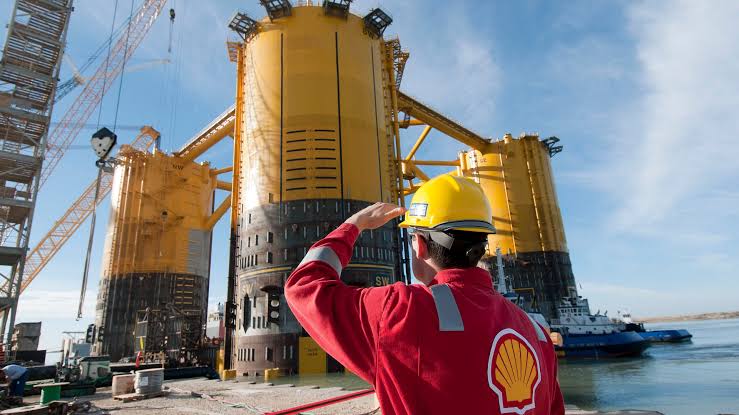
Shell Nigeria Gas Limited has called on the Federal Government to expand the country’s gas pipeline network to improve access to natural gas for manufacturers and reduce the cost of industrial production.
The company said limited pipeline infrastructure was preventing many businesses from benefiting from Nigeria’s 215.19 trillion cubic feet of proven and probable gas reserves, forcing them to depend on more expensive energy sources.
The call was made during the Manufacturers Energy Security and Energy Efficiency Summit in Lagos, where Shell identified inadequate gas transportation infrastructure as a major challenge to industrial growth.
In a presentation titled Gas for Manufacturing: Closing the Pipeline Infrastructure Gap to Improve Manufacturing Competitiveness, the company disclosed that Nigerian manufacturers spent approximately N1.34tn on alternative energy sources in 2025.
The Managing Director of Shell Nigeria Gas Limited, Ralph Gbobo, represented by the company’s Asset Reliability and Integrity Manager, Samuel Ojo, said expanding pipeline connections would provide manufacturers with more affordable and cleaner energy while reducing their reliance on diesel and other liquid fuels.
He noted that Europe has more than 10 times Nigeria’s gas transmission pipeline infrastructure per capita, stressing the need for increased investment to close the gap.
Shell also presented a comparison showing that electricity generated with pipeline gas has an energy cost index of 30 per cent, compared with 100 per cent for diesel-powered generation and 62 per cent for grid electricity supported by diesel generators.
The company explained that manufacturers could achieve significant energy cost savings by switching to pipeline gas, although actual benefits would depend on reliable supplies and access to suitable pipeline connections.
On infrastructure development, Shell identified the Obiafu-Obrikom-Oben pipeline as an important link between Nigeria’s eastern and western gas networks.
It also highlighted the Ajaokuta-Kaduna-Kano pipeline, which is expected to extend gas access to northern Nigeria and support new industrial and manufacturing activities.
Another project mentioned was the Escravos-Lagos Pipeline System II, which increased the system’s designed gas transmission capacity from approximately 1.1 billion to 2.3 billion standard cubic feet per day.
Shell further acknowledged government initiatives, including the Decade of Gas programme and the Midstream and Downstream Gas Infrastructure Fund, as important measures for attracting investment into the sector.
The company disclosed that Shell Nigeria Gas had constructed more than 150 kilometres of distribution pipelines and currently supplies natural gas to over 140 manufacturers across Ogun, Abia and Rivers states.
Its distribution network delivers about 60 million standard cubic feet of gas daily, equivalent to approximately 300 megawatts of electricity.
To accelerate development, Shell urged the Federal Government to complete major gas pipelines, simplify approval processes and direct available funding towards commercially viable infrastructure projects.
It also called on the Manufacturers Association of Nigeria and business owners to combine their gas requirements across industrial clusters and establish firm supply agreements to encourage investment in additional pipeline infrastructure.
The company said a wider and more reliable gas network would improve manufacturing competitiveness and support industries such as food processing, fertiliser production and cold-chain logistics, while strengthening Nigeria’s energy security.