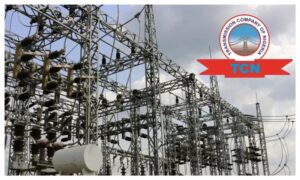

The Federal Government has identified improvements in electricity transmission and supply as key to achieving its ambition of growing Nigeria’s economy to $1 trillion by 2030.
Minister of Power, Joseph Tegbe, said the government was expanding investments in transmission infrastructure, strengthening partnerships and exploring new funding arrangements to improve electricity delivery across the country.
He disclosed this on Thursday at the 6th Annual Conference of the Power Correspondents Association of Nigeria in Abuja, where he outlined four priorities for the sector: stabilising the national grid, improving financial sustainability, maximising existing assets and expanding transmission infrastructure.
According to Tegbe, more than 15,000 megavolt-amperes (MVA) of transmission capacity have been added to the national grid between 2023 and October 2026.
He also revealed that the government had raised N1.23 trillion from a N3.3 trillion intervention plan approved to clear verified outstanding debts owed to electricity generation companies. The initiative is expected to ease financial pressure on power producers and improve their ability to pay for gas supplies and maintain generating plants.
On electricity metering, the minister said the Presidential Metering Initiative had distributed more than 2.8 million meters to reduce revenue losses associated with unmetered electricity consumption.
He added that the Rural Electrification Agency was extending access to electricity through solar projects serving universities, healthcare facilities and rural communities. However, he identified vandalism as a major challenge, noting that attacks on power infrastructure continue to disrupt electricity supply.
Also speaking, the Managing Director of FGN Power Company Limited, Kenny Anuwe, said achieving the $1 trillion economic target would require greater private-sector participation, rather than relying heavily on government funding.
He stressed that affordable and reliable electricity remained essential for economic expansion.
Meanwhile, the Transmission Company of Nigeria (TCN) reported that its electricity transmission capacity had increased from approximately 7,000 megawatts (MW) to 8,700MW.
The company also disclosed that Nigeria’s installed electricity generation capacity stands at 13,625MW, while the highest amount of power ever delivered to the national grid remains 5,801.84MW, according to figures from the Nigerian Electricity Regulatory Commission.
TCN further said it had installed 82 transformers between January 2024 and November 2025, adding about 8,500MVA to transmission capacity, with support from more than $1.4 billion in multilateral financing.
The transmission company disputed claims that inadequate transmission infrastructure was the primary cause of electricity shortages, arguing that limited power generation remained a major constraint.
The Federal Government is targeting the delivery of 6,000MW of electricity through the national grid by December 2026 as part of efforts to improve supply and support its broader economic growth ambitions.