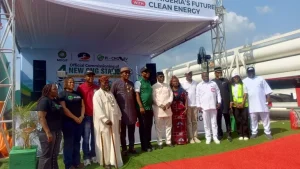
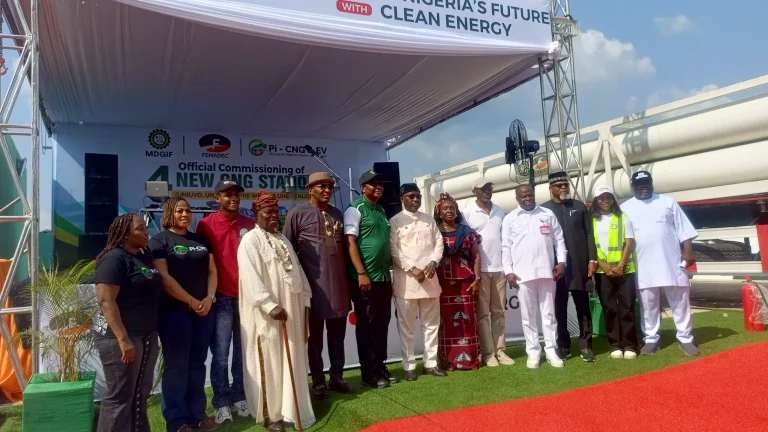
The Federal Government has commissioned Compressed Natural Gas (CNG) stations in four universities across the South-South and South-East regions as part of efforts to lower transportation costs for students, university workers and surrounding communities.
The facilities are located at the University of Uyo in Akwa Ibom State, University of Calabar in Cross River State, University of Nigeria, Nsukka, in Enugu State, and the Federal University of Petroleum Resources, Effurun, Delta State.
Speaking at the inauguration in Uyo on Tuesday, the Minister of State for Petroleum Resources (Gas), Ekperikpe Ekpo, said the initiative would improve access to cheaper and cleaner transportation fuel while reducing the financial burden on commuters.
He explained that switching to CNG would help vehicle owners, commercial drivers and transport operators spend less on fuel compared with petrol and diesel.
According to him, the savings would be particularly beneficial to students and low-income commuters who depend on public transportation for their daily activities.
Ekpo added that the facilities would also create opportunities for universities to strengthen research, develop technical expertise and train students in CNG-related technologies.
He commended President Bola Tinubu for supporting the initiative through the government’s Renewed Hope Agenda, noting that natural gas was increasingly being deployed for domestic economic activities, including transportation.
The minister also highlighted the Special Palliative Relief on University Transportation Programme, approved by the President under the 20 Universities CNG Ecosystem Initiative, as part of measures to ease the impact of petroleum subsidy reforms on students and university employees.
Meanwhile, the Executive Director of the Midstream and Downstream Gas Infrastructure Fund, Oluwole Adama, disclosed that the four stations in Uyo, Calabar, Enugu and Warri have a combined capacity to serve approximately 540 vehicles daily.
He said the facilities would make transportation more affordable for students and reduce operating expenses for commercial transport businesses.
Adama further explained that the stations would serve as practical training centres where young Nigerians could acquire experience in gas operations, engineering, safety procedures and equipment maintenance.
He revealed that about 50 additional projects were expected to approach commissioning before the end of the year, urging transport operators and businesses to maximise the opportunities provided by the facilities.
Also speaking, the Chief Executive Officer of FEMADEC Energy Limited, Fola Akinnola, said the four CNG daughter stations would reduce daily transportation fuel expenses by bringing more affordable energy directly to university communities.
Akinnola described the projects as the outcome of collaboration between FEMADEC Energy, the Midstream and Downstream Gas Infrastructure Fund and the Presidential Initiative on Compressed Natural Gas and Electric Vehicles.
He noted that the installations were designed to address transportation challenges affecting students, lecturers, campus shuttle operators and residents of neighbouring communities.
The initiative forms part of the Federal Government’s broader efforts to expand domestic natural gas utilisation and promote cleaner and more affordable transportation across the country.