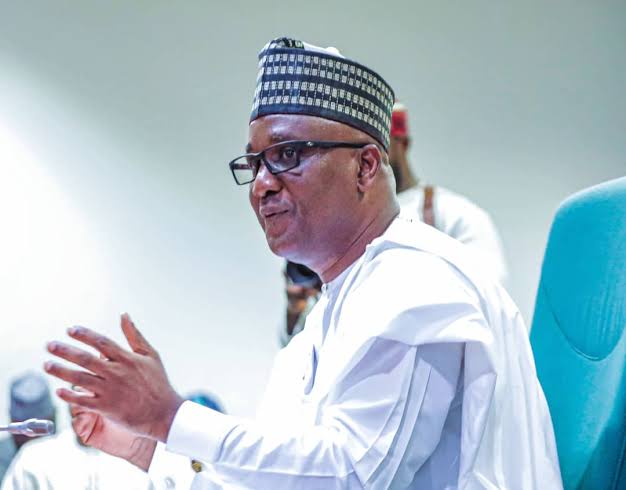
Speaker of the House of Representatives, Rt. Hon. Abbas Tajudeen, has declared that Nigeria has no alternative but to adopt renewable energy to secure its economic future and align with global trends.
Speaking in Lagos at the First Legislative Conference and Expo on Renewable Energy—organized by the House Committee on Renewable Energy and the United Nations Development Programme (UNDP)—Speaker Abbas emphasized the urgent need for policy action.
“The transition to renewable energy is not just an economic necessity; it holds substantial implications for national policy agendas,” he said. “Renewable energy has become central to inclusive economic growth, climate adaptation, and industrial innovation.”
The Speaker highlighted the global momentum behind clean energy, noting that in 2024 alone, 585 gigawatts of renewable energy were added worldwide, accounting for over 92% of new power generation. “The total installed capacity now exceeds 4,448 gigawatts,” Abbas said. “This expansion, led by solar and wind, proves their cost-effectiveness and scalability.”
Abbas pointed to Nigeria’s heavy reliance on fossil fuel exports as both a risk and an opportunity. “Countries like Nigeria will have no choice but to diversify their economy to maintain financial stability,” he warned, urging swift investment in clean energy solutions.
He also cited recent legislative efforts, including the removal of VAT on renewable energy and compressed natural gas, and ongoing efforts to provide legal backing for Nigeria’s Renewable Energy and Energy Efficiency Policy.
“Strategic Objective 8.5 of our Legislative Agenda aims to promote the transition to renewable energy,” he added. “We are enacting laws that encourage private investment, including tax incentives and targeted financing.”
Highlighting the Tinubu administration’s recent $1 billion financing initiative for the Rural Electrification Agency, Abbas said, “This has already led to the deployment of 124 mini-grids and over 25,000 solar home systems, benefiting more than 200,000 people.”
He stressed that legislation will play a pivotal role in unlocking Nigeria’s renewable energy future. “We are learning from countries like Germany and Egypt, where supportive laws have accelerated clean energy development,” he concluded.