In a major win for President Bola Ahmed Tinubu’s Renewed Hope Agenda, Green Energy International Limited (GEIL) has completed the construction of the Otakikpo crude oil terminal—marking a significant step toward resolving the decades-long Ogoni oil crisis.
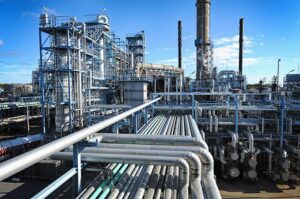
The terminal, located near the long-neglected Ogoni and Opobo oil fields, is the first privately developed crude oil terminal by an African operator. With a storage capacity of 750,000 barrels—expandable to 3 million—and a pumping capability of 360,000 barrels per day, the facility provides a long-awaited evacuation route for stranded reserves.
“This terminal is a turning point,” said Professor Anthony Adegbulugbe, Chairman and CEO of GEIL. “Without it, these assets would continue to be stranded and undeveloped. Now, with our multiphase fluid flow technology, these fields could deliver up to 200,000 barrels of oil per day and unlock 3 billion barrels in reserves within 12 months of project sanction.”
The Otakikpo terminal sits just 6 to 13 kilometers from the Ogoni and Opobo fields—fields that have remained inactive for over 30 years due to environmental, political, and logistical challenges. Prior to the project, the closest export infrastructure was over 60 kilometers away.
President Tinubu has prioritized energy security and regional development, pledging to bring sustainable growth to neglected oil-producing communities like Ogoni. The administration sees the GEIL terminal as a practical manifestation of its commitment.
Industry observers say the terminal not only addresses long-standing bottlenecks but also opens the door for third-party producers, promoting inclusion and economic activity in the Niger Delta.
“The Otakikpo terminal aligns with our goal to modernize the oil sector and empower local communities,” a senior presidency official noted. “It’s a core part of the Renewed Hope Agenda.”
As Nigeria prepares for its first crude exports from the new facility, the project is being hailed as a symbol of homegrown innovation and a critical step toward national energy independence and regional healing.