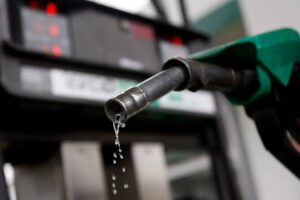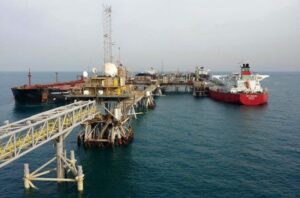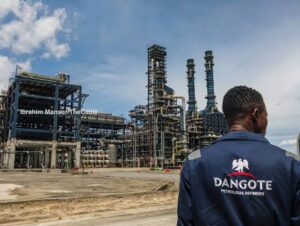
The Nigerian Midstream and Downstream Petroleum Regulatory Authority (NMDPRA) has revealed that only slightly over 50% of the country’s 256 petroleum product depots are currently operational, largely due to the effects of fuel subsidy removal.
Engr. Farouk Ahmed, Authority Chief Executive (ACE) of NMDPRA, disclosed this while addressing journalists in Abuja. According to him, the subsidy removal has reduced the capacity of depot owners and significantly reshaped the gas distribution market.
“Regarding gas distribution and product depots, there are approximately 256 product depots, but only slightly over 50% of them are currently operational,” Ahmed said.He noted that the new competitive environment in the gas sector is spurring efficiency and investment as firms now strive harder to gain market share.
Ahmed also touched on the broader impact of global economic uncertainties on Nigeria’s oil-dependent economy.
“The global oil market has experienced volatility due to the American government’s tariff policies. The most concerning aspect is the inconsistency in President Trump’s pronouncements, which leaves investors and traders uncertain,” he said.While consumers may benefit from falling oil prices, Ahmed warned that Nigeria’s economy suffers due to dwindling revenue inflows.
“When we consider the nation as a whole, this is detrimental because our revenue inflow is negatively impacted, worsened by vandalism, illegal bunkering, and low production,” he added.
Clarifying the structure of petroleum sector regulators, Ahmed stressed that NMDPRA and the Nigerian Upstream Petroleum Regulatory Commission (NUPRC) operate independently of the Nigerian National Petroleum Company Limited (NNPCL).
“Many believe NMDPRA and NUPRC are under NNPCL. That’s not correct. NNPCL is a commercial entity. NUPRC regulates upstream, and NMDPRA regulates the mid and downstream sectors,” he explained.
The NMDPRA boss also reaffirmed the agency’s commitment to expanding gas usage in line with the Petroleum Industry Act (PIA) mandates.> “We’re moving aggressively to deepen gas utilisation as an alternative energy source,” he said.
He noted that NMDPRA manages vital infrastructure, including a pipeline network over 5,000 kilometers long, formerly operated by NNPCL, which connects product depots nationwide.
NMDPRA continues to play a key role in overseeing the entire petroleum value chain—from refineries and petrochemical plants to product transportation and retail distribution.