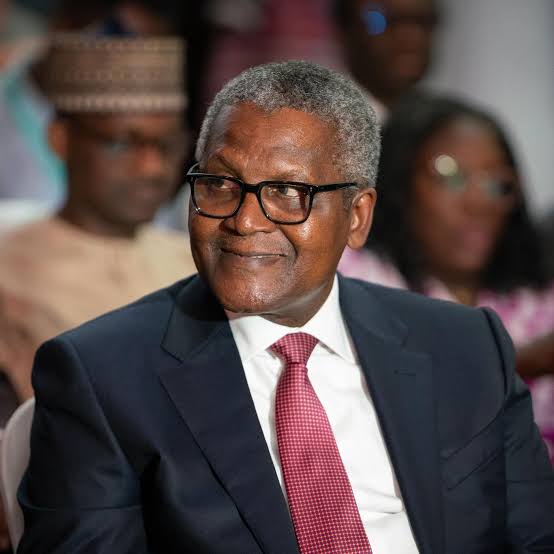
The President of Dangote Group, Aliko Dangote, says Nigerians are currently paying just 55% of what other West African countries pay for petrol, thanks to the local refining efforts of his mega refinery.
Speaking during a high-level visit by the President of the Economic Community of West African States (ECOWAS) Commission, Dr Omar Touray, to the 650,000 barrels-per-day Dangote Refinery in Lagos, Dangote stated that petrol from the refinery sells between N815 and N820 per litre, far below the average $1 per litre (about N1,600) paid in neighbouring countries.
“Many Nigerians don’t realise that they are currently paying just 55 per cent of what others in the region are paying for petrol,” he said.
Dangote also highlighted how the refinery has drastically cut diesel prices in Nigeria: “Last year, when we began diesel production, we were able to reduce the price from N1,700 to N1,100 at a go, and as of today, the price has crashed further.”
He emphasized that the impact has rippled across the economy, especially in sectors like mining and agriculture.Touring the facility, ECOWAS Commission President Dr Omar Touray described the refinery as a “beacon of hope for Africa’s future” and praised Dangote’s vision.
“Everybody who doesn’t believe in Africa should come here… this is what our continent should focus on,” Touray said.Touray also stressed that the refinery meets the Euro V fuel standard, critical for reducing sulphur levels in petroleum products across the region.
He called for greater collaboration between governments and the private sector, and pledged ECOWAS support for enabling Dangote’s access to wider regional markets.
Dangote countered criticism that the refinery cannot meet local demand, saying: “There have been many claims suggesting that we don’t even produce enough to meet Nigeria’s needs… But now, they (ECOWAS officials) are here to see the reality for themselves.”
He urged African nations to stop depending on imports and start building for themselves. “As long as we continue importing what we can produce, we will remain underdeveloped,” he stated.
The ECOWAS delegation included top commissioners and directors, who also called for stronger policies to support industrial growth across the continent.