The Petroleum and Natural Gas Senior Staff Association of Nigeria (PENGASSAN) has accused petroleum marketers of exploiting Nigerians by keeping pump prices high despite a significant drop in global crude oil prices, and blamed regulatory agencies for failing to act.
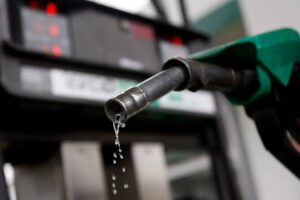
At a press briefing in Abuja, PENGASSAN President Festus Osifo said petrol prices have remained between N850 and N900 per litre, even though crude oil has dropped to about $60 per barrel.
“If you could recall, at the time when the price per litre of petrol was sold around 900 Naira per litre, the international crude price was somewhere around $80 per barrel,” Osifo stated.
“When the crude price reduced to around $60 per barrel, we did not see commensurate reduction in the pump price… Nigerians were exploited within that period.”
He said if the downstream sector was operating transparently, petrol prices should have dropped to between N700 and N750 per litre, assuming the exchange rate remained stable.
While acknowledging the role of business in making profits, Osifo stressed that regulators must protect consumers.
“Yes, we understand that people have invested in their business… That is why we have regulators,” he said.
He called on the Nigerian Midstream and Downstream Petroleum Regulatory Authority (NMDPRA) to start publishing a transparent pricing template for petrol based on real-time crude prices.
“If this trend continues, it means that if the crude price comes down to $50 per barrel, we will not see appreciable gains,” he warned.
“But the way the industry works, tomorrow, when the price of crude rises to $80 or $90 per barrel, we are going to pay more. So why can’t we feel the benefit when the price comes down?”
On other industry matters, Osifo praised the 20% tax credit incentive in President Bola Tinubu’s recent Executive Order to lower production costs, but pointed out that insecurity remains the biggest cost driver in Nigeria’s oil and gas sector.
“For one installation, you are going to have a minimum of three or four security vessels… You pay for them on a daily basis,” he said, highlighting the heavy burden on upstream companies.
He attributed the exit of many international oil companies (IOCs) to the high cost of security.
On the state of Nigeria’s public refineries, Osifo reaffirmed PENGASSAN’s call for a public-private partnership model, using the Nigeria LNG (NLNG) model as a blueprint, with 49% government ownership and 51% private equity.
“That model has worked. That is why NLNG is profitable today. It is making billions of dollars per year in profit,” he noted.
Osifo also announced that PENGASSAN had resolved its dispute with Sterling Oil Company regarding the employment of expatriates.
“We have been able to sign a communique… More Nigerians are going to be employed and trained to take over these jobs,” he assured.