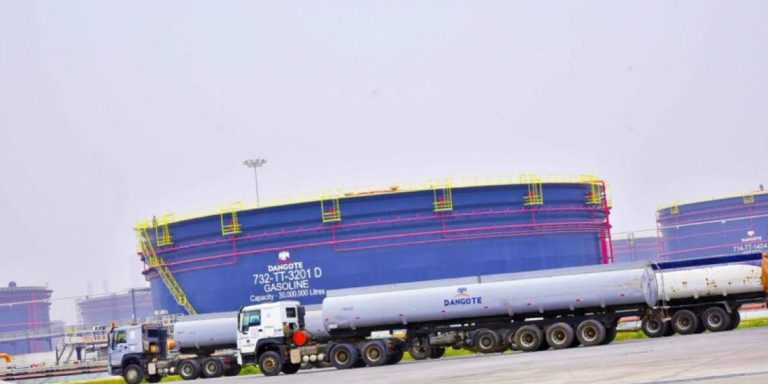
The Crude Oil Refineries Association of Nigeria (CORAN) says the government’s failure to support local modular refineries is creating unfair conditions in the oil sector, giving the impression that Dangote Petroleum Refinery is forming a monopoly.
CORAN’s Publicity Secretary, Eche Idoko, explained that while many are concerned about Dangote’s market dominance, the real problem is the lack of crude oil supply to smaller private refineries. He stressed that the government’s delay in enforcing key policies and providing necessary support is what’s limiting competition in the industry.
Idoko pointed out that Nigeria now has multiple privately-owned refineries, including Aradel, Waltersmith, OPAC, Clairgold, and Azikel, which are either operational or nearing completion. These, he said, can contribute significantly to reducing fuel imports, boosting job creation, and strengthening energy security if given fair access to crude.
Unlike Dangote, which secures crude through private deals, most smaller refineries depend on the government’s Domestic Crude Supply Obligation (DCSO) policy for access. However, this policy is not being properly implemented, leaving many struggling to stay afloat.
To level the playing field, CORAN is urging the government to fully enforce the DCSO, establish a Midstream Refinery Development Fund (MRDF) to help modular refineries acquire essential equipment, and pass laws that encourage fair pricing and infrastructure sharing.
Idoko warned that without swift action, the government’s inaction could be the very reason a monopoly takes root in the refining sector.
He also cited a recent report showing that 82% of Nigeria’s crude was exported in the first quarter of 2025, leaving only 18% for local use further underscoring the need for immediate intervention.