
The Federal Government has scrapped the practice of awarding oil field licenses to firms that leave them undeveloped, signaling a new era aimed at boosting crude production and eliminating inactive oil blocks.
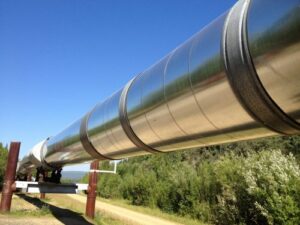
At the ongoing Nigeria Oil and Gas Energy Week in Abuja, the Nigerian National Petroleum Company Limited (NNPCL) revealed that five major crude oil pipelines; including the Trans-Niger and Trans Forcados lines have now achieved full operational status for two straight months. Despite this, oil output remains well below Nigeria’s target of 2.02 million barrels per day, as set in the 2025 budget.
NNPCL’s Group CEO, Bayo Ojulari, praised the turnaround in infrastructure security, describing the 100% availability of pipelines as a major milestone. He said this progress results from collaboration between the government, regulators, and security forces. However, he expressed concern that production levels haven’t improved to match the enhanced transport capacity, blaming years of underinvestment.
Ojulari called on both local and foreign investors to leverage the stable infrastructure and policy reforms to inject fresh capital into oil and gas development.
Meanwhile, Minister of State for Petroleum Resources (Oil), Heineken Lokpobiri, emphasized that companies without the technical or financial strength to develop oil fields will lose their licenses. He stressed that oil licenses should not be used merely to access funding without any development commitment.
The government has also hired a global consultant to harmonize over 270 different regulatory fees in the sector. The goal is to benchmark Nigeria’s charges with those of other oil-producing countries, making the business environment more competitive and attractive to investors.
Despite improved midstream infrastructure, challenges like oil theft, sabotage, and inefficiencies persist. Industry experts warn that pipeline uptime alone doesn’t guarantee that oil will reach export terminals, as losses still occur along the route. They argue that pipeline security must go hand in hand with addressing theft and ensuring full accountability in oil transport.
On the gas front, the NNPCL recorded progress on its $2.8 billion Ajaokuta–Kaduna–Kano pipeline, confirming successful work across the River Niger, a technically complex part of the project. The Minister of State for Gas, Ekperikpe Ekpo, said the government remains committed to using Nigeria’s 200+ trillion cubic feet of gas to drive industrialisation and power generation under the Decade of Gas initiative.