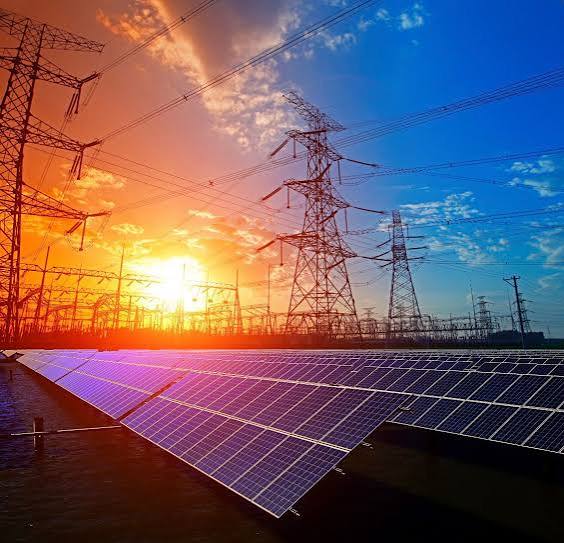
The United Kingdom’s development finance arm, British International Investment (BII), has committed $7.5 million to boost Nigeria’s off-grid renewable energy sector, providing fresh momentum to the country’s electricity access push.
The investment will be deployed through a partnership with Odyssey Energy Solutions, a US-based climate technology firm that links solar developers with suppliers, financiers, and regulators. It is part of the World Bank–backed Distributed Access through Renewable Energy Scale-Up (DARES) programme, which seeks to deliver improved electricity to at least 17.5 million Nigerians.
The facility is designed to ease one of the sector’s biggest hurdles — upfront financing. Developers will now be able to acquire solar panels and energy storage systems with repayment starting only after projects begin generating revenue.
“With nearly 90 million people still without access to power, mini-grids powered by clean energy are vital for closing Nigeria’s energy gap,” said Benson Adenuga, BII’s West Africa regional director.
For Odyssey, which manages over $3 billion in climate and renewable financing across more than 50 countries, the deal strengthens its role in Africa’s largest economy. Its co-founder, Piyush Mathur, noted that the support from BII would make flexible, affordable financing more widely available to developers.
The move aligns with BII’s climate strategy, which targets channeling at least 30 percent of new investments into green projects between 2022 and 2026. With nearly £10 billion in assets and operations across 66 countries, BII has been scaling its commitments in Africa, recently co-launching a $70 million fund for small and medium enterprises in Zambia.
Nigeria’s chronic power shortages continue to hinder growth, with millions relying on costly, polluting diesel generators despite abundant renewable potential. Analysts say decentralised solutions like mini-grids represent one of the fastest ways to bridge the access gap, especially with rising demand from households and small businesses.
The UK government has framed the $7.5 million pledge as both a practical step and a diplomatic signal. Jonny Baxter, the UK’s deputy high commissioner in Lagos, described it as evidence of the growing role of private capital in driving Africa’s clean energy transition.
Though modest compared to Nigeria’s multi-billion-dollar energy needs, experts believe the investment could unlock additional capital and accelerate deployment in underserved areas. As Adenuga put it: “The potential for renewable energy to transform lives and economies in West Africa is immense. This partnership is another step toward making universal access in Nigeria a reality.”